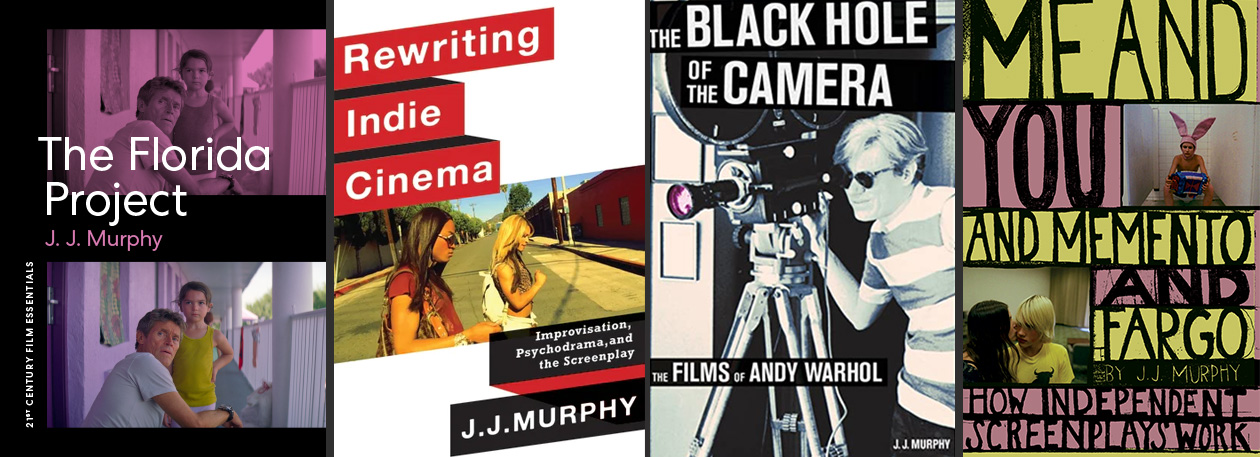
The Black Hole of the Camera

Me And You and Memento and Fargo


Best Independent Films of 2012

My best film list always appears in February, but I’m late this year, mainly because, even though I saw a streamed version of Julia Loktev’s The Loneliest Planet, I wanted to see it again in 35 mm. It played at our Cinematheque only last Friday. Yet, that issue aside, it’s been a hard year for me to keep up with the blog. Due to time constraints, I’ve been forced to be more selective in my coverage. As a general rule, I don’t write about films unless I’m enthusiastic about them and have an opportunity to view them at least twice.

More of my attention this year went toward other pursuits. My book, The Black Hole of the Camera: the Films of Andy Warhol, was published by the University of California Press in April. As a result, I’ve been screening films and lecturing more than usual. I gave two conference papers, a couple of presentations at the Brakhage Symposium in Boulder, a keynote in Sydney, and screenings and talks in Milwaukee, Boston, and Houston in the fall. I’m also co-organizing, with my colleague Kelley Conway, an international conference on screenwriting. The 2013 SRN Screenwriting Conference will take place in Madison (August 20–22) and will feature 70 scholars from around the world.

On one level, I could complain that independent cinema seems to have fallen off a cliff. Although there are more films being made than ever before, getting them distributed has become even more difficult than in past years. Many people, especially those living outside major cities, don’t seem to want to leave their houses. People want their media when they want it, so streaming has become the preferred means of distribution, relegating DVDs to the latest casualty of the digital revolution.

The situation for indie cinema is a lot like in the 1960s. Now that there’s less prospect of there being a pot of gold out there for the grabbing, independent filmmakers, in some ways, are making the films they really want to make. I applaud that impulse. Greta Gerwig and Lena Dunham are now considered mainstream. You can make fun of mumblecore all you want, but it had an undeniable impact. By all accounts, 2013 promises to be a great year for independent cinema. Andrew Bujalski, Richard Linklater, Matthew Porterfield, David Lowery, Shane Carruth, Harmony Korine, and Jeff Nichols, among others, all have new films.

Most top ten lists are based on a film having a theatrical release. Using that criterion, Amy Seimetz’s Sun Don’t Shine, Dan Sallitt’s The Unspeakable Act, and Frank V. Ross’s Tiger Tail in Blue count for this year rather than last. The same goes for Tim Sutton’s Pavilion. I’m starting to feel that the line has become extremely blurry. I wrote about Bad Fever and Green ages ago. Chris Smith’s The Pool, which was listed in my 2008 poll, only recently made it out on DVD.

I’ve seen many of the films that made other more eclectic lists: Holy Motors, Amour, Cosmopolis, Tabu, The Master, Silver Linings Playbook, Moonrise Kingdom, The Kid with the Bike, In Another Country, and so forth. I also saw some wonderful avant-garde films, including several programs of Phil Solomon’s work, as well as programs by Vanessa Renwick and Stacey Steers during the past year. I also saw Chris Sullivan’s terrific animated feature, Consuming Spirits, but regret that I’ve only seen this new version once, and haven’t had the opportunity to write about it. I also try to follow what’s screening in museums and galleries. By far, the most impressive piece I saw was Eve Sussman’s self-generating and ever changing whiteonwhite:algorithmicnoir, made in collaboration with the Rufus Corporation. I found the interplay between the computer program and what appears on the screen to be utterly fascinating. I enjoyed the opportunity to discuss the work with the film’s actor, Jeff Wood, who spoke at the screening I attended in Houston.

Here is my list of the best indie films of 2012:

(Click on the titles below for extended commentary).

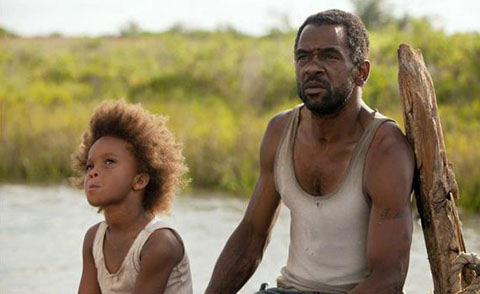
  1. Beasts of the Southern Wild (Benh Zeitlin)
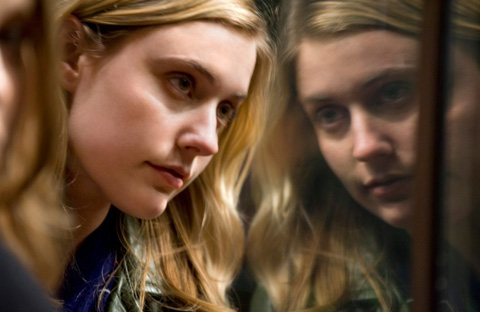
  2. The Loneliest Planet (Julia Loktev)
  3. Two Years at Sea (Ben Rivers)
  4. Starlet (Sean Baker)
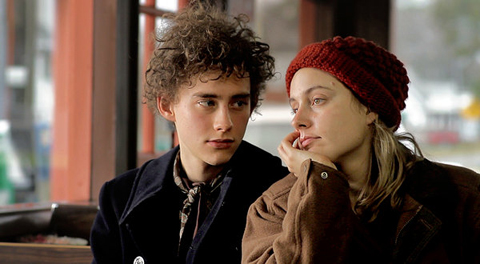
  5. The Dish & the Spoon (Alison Bagnall)
  6. The Color Wheel (Alex Ross Perry)
  7. Bad Fever (Dustin Defa)
  8. Green (Sophia Takal)
  9. Dark Horse (Todd Solondz)
  10. For Ellen (So Yong Kim)

I found the sheer ambition of Beasts of the Southern Wild to be totally impressive. It’s worth noting that Sean Baker has now made three strong films in a row, as has So Yong Kim. Julia Loktev’s The Loneliest Planet convinces me that she has emerged as a major American indie filmmaker. Loktev has indicated that the film was incredibly hard to shoot. To anyone who has ever made one, that’s pretty obvious. In terms of performance, I found the chemistry between Greta Gerwig and Olly Alexander in The Dish & the Spoon and between Dree Hemingway and Besedka Johnson in Starlet to be pretty riveting.

For purposes of comparison, you might want to check out my lists of “The Best Indie Films of 2011,” “The Best Indie Films of 2010,” “The Best Indie Films of 2009,” and “The Best Indie Films of 2008.”

Posted 28 February, 2013

The Dish & the Spoon

Alison Bagnall’s The Dish & the Spoon (2012) contains elements not usually found in low budget independent films: children’s nursery rhymes, antiques, colonial history, period costumes and dancing, 19th century literature, references to early cross-dressers, and flights of fantasy that mix with a more familiar naturalism. The film stars Greta Gerwig and features indie standouts Eleonore Hendricks and Amy Seinmetz in small roles, along with Adam Rothenberg.

Bagnall and Gerwig had written a script together in which the female actor was to play the lead role, but it fell through at the last moment due to issues of financing. With Gerwig’s career about to take off following her breakthrough performance in Noah Baumbach’s Greenberg (2010), Bagnall came up with a new story. She and co-writer Andrew Lewis wrote a script for Gerwig and the young British actor, Olly Alexander, whom the director had discovered in an audition for the larger budget film.

Bagnall explains: “So in this story that fell out of the night, I imagined a woman, freaking out from a marital crisis, and this British boy who is as much an apparition as he is real. And how he becomes a sort of guardian angel and witness to her insanity and he helps her just by being there, but he also gets drawn in by her.” The actors were given a great deal of latitude with their characters, altering the script in discussions before shooting and adapting scenes to the site-specific locations of an off-season beach town in Delaware. It’s hardly surprising that much of the pleasure of The Dish & the Spoon derives from the inspired performances of Gerwig and Alexander, who have script credits for providing additional material.

The film begins with an extended shot driving through a tunnel. Framed from behind, Rose (Gerwig), who’s wearing a red woolen hat and a baggy winter coat over her pajamas, sobs to a ringing cell phone, which she angrily chucks out the window of her station wagon. At a general store, she uses her remaining change and crumpled bills to buy doughnuts and beer. As she plops herself down and gulps a beer inside a stone observation tower on the coast, she discovers a teenager curled up and shivering on an upstairs landing. She initially tries to take the boy to a hospital, but he refuses to go and suggests she’s drunk. The scrawny young man has a British accent, a tailored pea coat, tight-fitting high waters, and long disheveled hair that makes him look like a young Bob Dylan.

At a restaurant, the lad pretends to be Ishmael and begins reciting the opening passage of Herman Melville’s Moby Dick, while Rose, who misses the allusion, averts her eyes, looks away, and makes a face. She finally interrupts and asks, “Do you have any place I can take you?” He responds coyly, “Where do you live?” Rose shakes her head from side to side. “Nope, nope,” she tells him emphatically, “I need to take you somewhere.” He tells her he’s a rent boy, a term he has to explain. When she doesn’t believe him, he asks, “What? Am I not attractive enough to be a male prostitute?”

After admitting he’s only kidding, the teen tells a series of tales about himself, including that he’s been abandoned by a girlfriend after waiting six hours for her “like a spoon,” so that it’s impossible to determine what’s fantasy from what’s real. He adds telling details, such as that his girlfriend wasn’t as pretty as he remembered. When Rose interrupts him again, he tells her, “You’re much prettier than she is . . . was.” As Rose becomes even more frustrated and he flirts, the teen takes a sip of his hot chocolate, so that he has a milk mustache from the whipped cream.

The Dish & the Spoon involves the continually shifting dynamic between the unlikely pair. Rose has just discovered that her husband cheated on her with a yoga instructor named Emma (Hendricks). She vents her anger by leaving threatening phone messages on answering machines and showing up at Emma’s house wanting to kill her, which unnerves her teen companion.

Rose and the boy hang out together and get drunk on a brewery tour. He continues to tell stories about himself. At Rose’s summer cottage, when he talks about being the only boy at school who hadn’t  reached puberty at sixteen, Rose laughs uproariously and guesses that part is true, causing the nameless teenager to end the game abruptly. Whoever he is, the teen wears fashionable clothes and has money in his wallet, which the penniless Rose needs. Although the two appear to bond, she’s not beyond stealing from him or sticking him with the bill.

Rose’s anger at men turns decidedly mean. At one point, she dresses the cute teen in women’s clothes, lipstick, and nail polish and the two of them reverse gender roles. As he sits on a bench in drag, she strolls by, dressed like a man and wearing a tie, and picks him up. It’s at this point that the element of fantasy, games, and role playing veers into psychodrama when she abuses the young man by kissing him roughly and demeaning him. Although Rose later apologizes, her behavior feels downright cruel and a bit too real, as she plays a psychological mind game.

Still dressed as a man, Rose calls Emma on the phone. When she reaches her answering machine, Rose now takes on the role of her adulterer husband. She tells Emma, “My wife, she’s crying all the time, but I don’t want you to think it’s your fault, baby. It’s not your fault. My wife is crazy, crazy before this ever happened . . . She was always flying off the handle and, you know, she got so fat . . . it was disgusting.” Rose continues sarcastically, “You didn’t cause it. You’re beautiful and perfect. You teach yoga. You’re hot.” She ends on an ominous note, “By the time you get this message, I hope my wife is dead.” Rose is clearly becoming unhinged, and shortly after this, she contemplates suicide, but the beach entrance is closed.

Rose rebounds afterward. She tells the teenager: “I have a plan. The plan is it’s just you and me.” As they hold hands, he takes her to a dance hall, where he plays the piano, while she tap dances. When Rose later asks him why he never smiles, he reveals that he’s ashamed of his teeth, which he then bares to the camera at some length, creating another naked moment. The two eventually kiss more tenderly and, like young kids, fantasize getting married and having ten children. They even go to a costume shop and dress in period costumes – he looks like a dandy – and have a mock wedding picture taken, but it’s all a whimsical game.

Gerwig and Alexander are mesmerizing to watch, especially when it feels as if, in terms of their performances, they are at times walking a very thin tightrope without a safety net. The circus metaphor is somehow apt. The two provide a stark contrast. In her baggy clothes and exaggerated outbursts either on the phone or outside Emma’s house, Rose seems to be channeling Gena Rowlands and rants like a petulant clown, while the nameless teen wears extremely large and narrow shoes that make him walk like a hobo.

Bagnall, who co-wrote Vincent Gallo’s Buffalo ’66 (1998), is not afraid to deal with intense emotions. Although Rose has been cheated on, her reaction seems so extreme that it becomes comedic. And the smitten teen is so unabashedly romantic that he also sets himself up to be a doormat once he falls for Rose and follows her around like a devoted puppy dog. In fact, as his opening monologue indicates, he’s very much a refugee from a bygone era. His flights of fantasy, while endearing, are at odds with his own situation, a melancholy young British kid alone and adrift in a nearly deserted American resort town before the Christmas holidays.

Shot by Mark Schwartzbard, who uses light to imbue the setting with a sense of magic, The Dish & the Spoon feels influenced by vaudeville as much as other indie films – from the work of Cassavetes to Harmony Korine’s Gummo (1997) and Bujalski’s Mutual Appreciation (2006). Yet, at heart, the film remains an intriguing character study. Bagnall, who had watched the two main actors do an improv together, remarks: “I liked the way they looked next to each other, and during the improv Olly revealed this provocative insolence, which triggered a prickly, somewhat merciless response in Greta that was really compelling to watch.”

In The Dish & the Spoon, which has been released on DVD, we sense that the psychological complexity of the main characters stems precisely from the way the two actors are constantly testing the limits of each other’s personal boundaries. They are playing a game of “chicken,” in which neither one flinches.

Posted 17 June, 2012

Best Independent Films of 2010

I’ve posted my “best film” list for the past three years now in February rather than December like other critics and bloggers. The reason is simple. Because I’m based in the Midwest, I always want to be sure I’ve seen all the major indie films that might be worthy of consideration. As I keep complaining, despite my best efforts, that’s not an easy task these days. So it takes me a bit longer to catch up with all the films I want to see. That said, as it turns out, I could have posted this earlier because none of the additional films I watched ended up making the list.

Some “best film” lists have strict rules. One blog limits indie films to budgets of under $1 million. The budgets on my list vary a great deal, but most of them (with the exception of Life During Wartime, Greenberg and Winter’s Bone) are pretty miniscule. On the other hand, there are many films made for a pittance that I wouldn’t consider independent – they’re really industry calling cards. I have little personal interest in such films. Another list insists that a film play at least three times. That might work in New York City, but here we’re often lucky if a film like Manoel de Oliveira’s The Strange Case of Angelica plays even once. It did in January at our Cinematheque, and I was grateful for an opportunity to see it. To my great surprise, Trash Humpers played for a week. The two other people at the screening I attended left after ten minutes. At least people had a chance to see the film, but that’s often not the case, which continues to be the major problem for alternative cinema.

I liked quite a number of international art films this year: Fish Tank, Everyone Else, Mother, White Material and The Strange Case of Angelica, among others. But again the focus of this blog is American indie cinema, not because of chauvinism, but because that happens to be my main research interest. There are plenty of other Web Sites out there that cover other types of films.

My list surprised even me this time around, which I guess is part of the fun of the exercise. For the record, I’ve seen every film at least twice. In fact, I never write about a film on the basis of a single viewing. No film seemed to benefit more from a second look than Guy and Madeline on a Park Bench. Trash Humpers, while a polarizing film for audiences, also resonated more on a second viewing. Less than half of the films on the list had brief commercial runs in town (Madison, Wisconsin). Three of them played at the Wisconsin Film Festival.

I saw some excellent films and videos in art galleries and museums in NYC this year. Standouts include: Ryan McNamara’s dance piece, I Thought It Was You, Tommy Hartung’s stop-motion animation The Ascent of Man, and works by Kalup Linzy, Dani Leventhal (all seen at Greater New York at PS 1). I also admired Mika Rottenberg’s Squeeze at Mary Boone in conjunction with Nicole Klagsbrun Gallery.

In any event, here is my personal list of the best indie films of 2010:

(Click on the titles below for extended commentary).

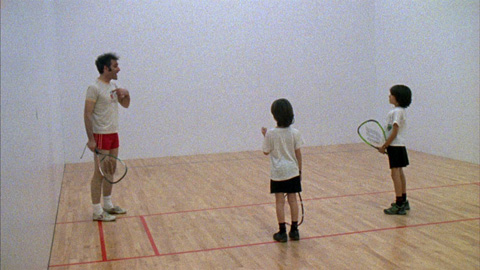
  1. Daddy Longlegs (Josh and Benny Safdie)
  2. Greenberg (Noah Baumbach)
  3. Winter’s Bone (Debra Granik)
  4. Face (Andy Warhol)
  5. Life During Wartime (Todd Solondz)
  6. Guy and Madeline on a Park Bench (Damien Chazelle)
  7. Tiny Furniture (Lena Dunham)
  8. Trash Humpers (Harmony Korine)
  9. The Exploding Girl (Bradley Rust Gray)
  10. Prince of Broadway (Sean Baker)

There were many extraordinary film performances this year: Greta Gerwig (Greenberg), Zoe Kazan (The Exploding Girl) , Jennifer Lawrence (Winter’s Bone), and Ronnie Bronstein (Daddy Longlegs).

For purposes of comparison, you might want to check out my lists of “Best Indie Films of 2009,” as well as the “Best Indie Films of 2008.”

Posted 23 February, 2011

Greenberg

It was inevitable that if the young filmmakers associated with mumblecore couldn’t capitalize on the phenomenon at the box office someone else would. Films like The Puffy Chair (2006), Baghead (2008), and Humpday (2009) were all expected to become commercial successes, but all of them fizzled badly. Noah Baumbach, who somewhat surprisingly produced Joe Swanberg’s Alexander the Last (2009), shot his latest film Greenberg (2010) with mumblecore mainstays Mark Duplass and Greta Gerwig.

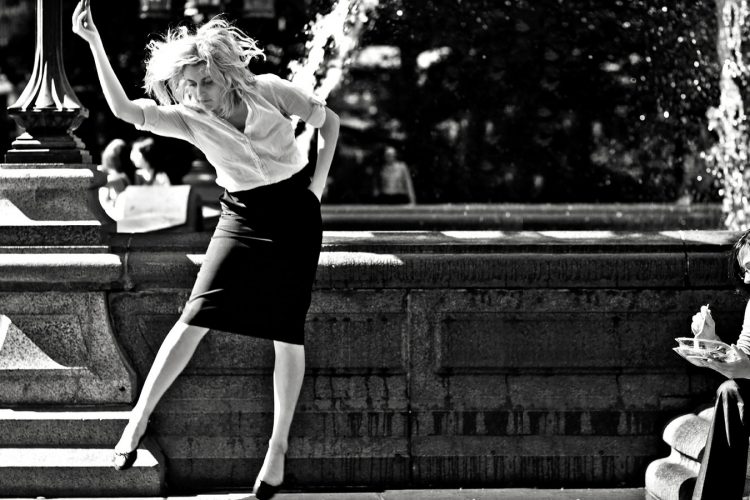
Just as John Schlesinger turned themes that Andy Warhol was exploring in My Hustler into the Academy-Award winner Midnight Cowboy (1969) with Jon Voight playing a male prostitute, so too has Focus Features’ Greenberg mined territory similar to mumblecore, while far exceeding the success of probably all of those films combined. Greenberg, in a limited theatrical release, has already grossed $3 million domestically. Of course, I’m being deliberately provocative in my analogy. Noah Baumbach is hardly John Schlesinger, and none of the mumblecore directors are in the same league as Andy Warhol. But the surprise here is less that Baumbach’s Greenberg is a modest commercial and critical hit than the fact that he has managed to turn Greta Gerwig into an overnight star.

A. O. Scott’s glowing article on Gerwig in the Sunday New York Times two weeks ago might have seemed over the top to many people. He writes: “Ms. Gerwig, most likely without intending to be anything of the kind, may well be the definitive screen actress of her generation, a judgment I offer with all sincerity and a measure of ambivalence. She seems to be embarked on a project, however piecemeal and modestly scaled, of redefining just what it is we talk about when we talk about acting.” Because acting is the one aspect of a film about which people most disagree, I’m pretty sure that The New York Times received a great deal of flack over this claim about Greta Gerwig.

There are several different types of film acting. “Star” acting aside, Hollywood acting, as embodied by someone like Meryl Streep, is the kind in which the artifice is completely evident in her performance. Every emotion is being telegraphed to us as viewers. In other words, when watching such performances, I’m always aware of exactly what the performer is doing – there’s never really a suspension of disbelief. Indeed, the performance in question is judged precisely on recognizing the divide between actor and role. Did you really believe for a second that Jon Voight was a male hustler? Probably not, but mainstream viewers appreciated his characterization rather than its sense of realism.

Think of Sissy Spacek and Tom Wilkinson in the scene where the Fowlers rip each other to shreds in Todd Field’s In the Bedroom. That’s Hollywood acting, as we watch how the two veteran actors build their performances step by step. I’m not saying that what they are doing isn’t powerful or emotionally affecting – with artifice it is always a question of degree. In Gus Van Sant’s My Own Private Idaho, there’s the scene where Mike (River Phoenix) tells Scott (Keanu Reeves) that he loves him as they sit by a campfire. The scene is painful and embarrassing to watch as a result of Mike’s vulnerability. River Phoenix doesn’t look at Reeves, wraps his arms around himself, assumes a fetal position, and rocks back and forth as he exposes his true feelings toward his friend. What I’ve just described is the artifice that Phoenix adds to a performance that is otherwise more naturalistic and more believable than that of Spacek and Wilkinson.

The last type of acting (of course I could break it down into any number of finer gradations) is naturalism. Non-professional performers, such as Cris Lankenau and Erin Fisher in Aaron Katz’s Quiet City would be examples. Warhol’s whole notion of the “superstar” was someone who plays herself or himself, which in some way represents the ideal of naturalism. It is interesting that A. O. Scott mentions two performances that I have raved about previously: Michelle Williams in Wendy and Lucy and Zoe Kazan in The Exploding Girl. Those are professional actors who bring tremendous skill to their naturalistic roles in these films. Scott distinguishes the untrained performance of Gerwig by noting: “Part of her accomplishment is that most of the time she doesn’t seem to be acting at all. The transparency of her performances has less to do with exquisitely refined technique than with the apparent absence of any method.”

In assessing the earlier performances of Gerwig – and I’ve seen the films he references – in light of Greenberg, Scott later suggests that “you begin to intuit a degree of calculation and craft beneath the spontaneity and sincerity.” In other words, he acknowledges that Gerwig is “acting.” By the same token, it would be naïve to think that a Warhol superstar such as Edie Sedgwick isn’t acting or playing to the camera in such films as Kitchen, Poor Little Rich, Beauty # 2 Restaurant, Afternoon, Space, or Outer and Inner Space. Edie is very different in each, and in audio recordings Edie’s personality diverges even more from anything I’ve seen of her on screen. As Erving Goffman and others have made clear, all of us are engaged in a series of roles in negotiating and performing our lives.

Much of this is related to the issue of improvisation or structured improvisation, which has some bearing on naturalistic performances like those of Lankenau and Fisher in Quiet City or Gerwig’s previous work with Joe Swanberg in LOL, Hannah Takes the Stairs, and Nights and Weekends. Swanberg’s films don’t have actual scripts. When asked in an interview how Greenberg differs from her previous work, Gerwig mentions that the new film represents a change in scale. She adds: “And I think having such a strict script is a big difference. I mean there was no improvisation in the movie. I mean, not a single word was different from how it was written. I’m always so happy when people ask me if I improvised, because that means that we sold it. But Noah writes in such a specific rhythm. He almost writes like a playwright, in terms of the way it needs to sound and read. There’s something about it that it just has this kind of musical quality, and if you miss a word, it sounds weird; it’s like hitting a false note in a song.”

To her credit, Gerwig manages to hit every note in Baumbach’s Greenberg, a romantic comedy which features Ben Stiller as a neurotic forty-year-old misfit named Roger Greenberg who returns to Los Angeles to house sit for his rich brother, Phillip (Chris Messina). Phillip has just taken the family to Vietnam, leaving behind the family dog, Mahler, and their personal assistant, twenty-five-year-old Florence Marr (Gerwig). Florence explains to one of the kids that she and Mahler aren’t going on the trip because they’re “not family.” Although Florence runs the household, she’s not very assertive in asking to be paid promptly. She meets Roger when she stops by the house to pick up her pay check. In the meantime, Florence impulsively sleeps with a guy she’s met at some art event. She tells him, “I just got out of a long relationship.” He responds, “This isn’t a relationship.”

Roger has come back to LA from New York with a lot of heavy baggage involving his brother, former band members, Ivan (Rhys Ifans)and Eric Beller (Mark Duplass), and an old flame named Beth (Jennifer Jason Leigh, who shares story credit with Baumbach), who now has a couple of kids. Just out of a mental institution after suffering a nervous breakdown, Roger, a carpenter by trade, is preoccupied with writing letters to various companies about a litany of petty complaints. When Roger first meets his tall British friend, Ivan, he reads him one of his letters rather than engaging with him on a personal level. When they attend Eric Beller’s party, Greenberg literally sweats the whole time.

Roger and Florence become involved with each other almost immediately, even though Florence tries to slow things down after the fact. In the middle of it, she asks him, “Do you hear a train?” Florence, for all her competence, is full of self-doubts. She apologizes for her ugly bra and tells him, “I get kind of nerdy.” And, as if speaking for her generation, she also confesses, “I don’t read enough.” Roger, for his part, is pretty much impossible. He’s extremely neurotic, but in a mean-spirited (though funny) way. He goes down on Florence in a matter of seconds, but when he suspects she might have a cold sore on her lip, he runs off to the bathroom to investigate and decides to make a quick exit. When she gives him a flier announcing that she’s singing at a small club, he announces, “We probably shouldn’t do this again.”

After Mahler becomes ill with an autoimmune disease, Roger and Florence reconnect – Roger no longer drives – and he does show up to watch her sing. “I’ve heard a lot about you,” Florence’s friend Gina (Merritt Wever) says knowingly, but Roger refuses her invitation to join Florence’s friends. When he gets together with Eric Beller, there’s still residual anger on Beller’s part over the fact that Roger torpedoed their band’s record contract years ago. As a result, Ivan developed a substance-abuse problem and now fixes computers, and poor Beller has been reduced to directing television. The friends are full of regrets involving the past. Ivan tells Roger at one point, “Youth is wasted on the young.” Roger answers, “I’d go further. Life is wasted on people.”

Roger spends much of the film venting about his life. At his birthday celebration at the restaurant, the waiters arrive with cake and candles and sing “Happy Birthday,” Roger startles everyone by shouting, “Sit on my dick, asshole.” The more reprehensible Greenberg behaves, the more Florence becomes enamored. She tells Roger she’s impressed by him, especially because he doesn’t seem pressured to be successful. She even says, “You can stay over. Wink. Wink.”  But when Florence tells him a silly story about her and a friend impersonating sluts with frat boys who videotaped them, Roger explodes and yells, “That’s the stupidest story I ever heard!” As he bolts out the door, he adds angrily, “What’s the point of that story?”

Roger, however, is still hung upon his old girlfriend Beth. He even calls her from his birthday celebration after inviting Florence to join him and Ivan. Roger tells her, “My dog is sick.” She responds, “My mom is sick.” But it’s a stalemate – he can’t imagine what that might actually mean for her. Roger manages to remember all sorts of small details about their earlier relationship, while it turns out that Beth has forgotten virtually everything. Their relationship obviously meant more to him than her – he’s been stewing over it all these years and wants to rekindle it. When Roger suggests that they should make a dinner date, Beth wisely refuses.

As Roger and Florence keep seeing each other, she comments on the fact that he likes old things. She then asks, “Do you think you could love me?” It is said in such a touching and heartfelt way that most men would melt on the spot, but Roger’s response is to ask her to stop calling him and to express a preference for someone older “who has low expectations about life.” He also psychoanalyzes her, managing to connect her behavior to being sexually molested. Florence at one point tells him, “You like me much more than you think you do.” Of course Roger does, but Greenberg is very much about a clash of generations. At a party later on, while Florence is temporarily out of the picture, Roger gets high and engages the college kids regarding their supposed differences. Roger calls them insensitive, and insists, “I’m freaked out by you kids.”

Baumbach’s risk in Greenberg is that not everyone will be amused by someone so angry. Coming to terms with adulthood and a life you never planned might not be easy, but everyone else his age but Roger has made the transition. On the other hand, Florence remains remarkably cheerful and upbeat despite her low-status job, a singing career that’s nowhere, her crush on a lunatic, and experiencing a traumatic event that she endures without complaint. Baumbach’s spin in Greenberg is putting these two different generational world views in conflict, which is also reflected in the acting styles. Ben Stiller is doing traditional comedy, while Gerwig excels at humorous naturalism. My guess is that most audience members will side with Florence, who’s quite likeable, rather than a self-absorbed character with an early mid-life crisis.

Critics have been proclaiming the death of mumblecore almost from the moment the term was coined by Andrew Bujalski’s sound mixer, Eric Masunaga, in 2005. A. O Scott writes: “It will be interesting to see how far Ms. Gerwig can go and also whether the aesthetic she represents will continue to blossom and cross-pollinate with other, older strains in American cinema.” He sees Baumbach’s Greenberg as suggesting “an intriguing transgenerational entente.” A more cynical view might call this a form of cooptation.

Postcript:

Since posting the above entry on Greenberg, I re-watched Hannah Takes the Stairs in order to take another look at Greta Gerwig’s performance. Joe Swanberg’s film is about a young woman, Hannah (Gerwig), who gets involved in multiple relationships over the course of a summer in Chicago. Why? We aren’t sure, nor is Hannah, other than the fact that she’s young and confused – a bit like Florence. Hannah dumps her current boyfriend Mike (Mark Duplass), who has quit his job, when she’s realizes she’s unhappy in the relationship. The reasons given are that she resents the fact that Mike is funnier than her and that he doesn’t even know the names of her sisters. Hannah drifts into another fling with her office mate Paul (Andrew Bujalski). He’s supposed to be a hot new writer, but, as in his own Mutual Appreciation, Bujalski plays a nerdy intellectual. Hannah soon tires of Paul as well, presumably because he’s not really there for her.

Hannah finally winds up with another co-worker Matt (Kent Osborne). When he confesses to her that he’s on anti-depressants, Hannah has a meltdown. Although much of the film feels as scattered as the characters, this scene with Hannah is the one where her acting talent is most obvious. Hannah tells Matt, “I tend to leave destruction in my wake.” When Matt asks her how things are going with Paul, she stares out the window rather than at him and suddenly begins to cry. The camera stays very close to her. Hannah talks about using him. Matt tells her he doesn’t even know what she’s sad about. Hannah responds, “I don’t know. I just feel like I’m seeking too many people out.” She talks about the manic nature of having crushes on people and her regrets after acting on those impulses. Four and a half minutes later, Matt unlaces her black sneakers and the two begin kissing. Hannah realizes that she’s using her looks and sexiness to cause other people pain, but she nevertheless feels helpless to do anything about it.

I went back to Matt Zoller Seitz’s review of the film in The New York Times from August 22, 2007. In the context of the mumblecore/ DIY film festival at the IFC Center at the time, he writes:

“For devotees of recent D.I.Y. moviemaking, “Hannah” will evoke melancholy feelings, and not just because the heroine finds (probably temporary) bliss without seriously examining her preconceptions. Mr. Bujalski is writing a movie for Paramount; Mr. Duplass and his brother and filmmaking partner, Jay Duplass, are writing and directing features for Universal and Fox Searchlight and have sold a television series to NBC; Mr. Swanberg and Ms. Gerwig are already finishing a new movie, and are so talented that they may not have to scrounge for financing for the next one. In light of all this, “Hannah” plays like an incidental swan song, a signpost marking the point when mumblecore became a nostalgic label rather than a present-tense cultural force, and its most acclaimed practitioners moved on to bigger things. Mr. Swanberg’s third movie is a graduation photo in motion: D.I.Y., class of ’07.”

For the record, Swanberg and Gerwig’s Nights and Weekends (2008) – the film to which Seitz is alluding – grossed a total of $5,000 at the box office worldwide (Hannah Takes the Stairs did $25,000). Andrew Bujalski subsequently made Beeswax (2009), a film which I consider one of the best indie films of last year. Despite generally favorable reviews, it made considerably less money than either of his previous two self-released films.

Mark and Jay Duplass’s Baghead, which was distributed by Sony Classics, grossed $140,000, but Mark Duplass also appeared as the lead actor in Lynn Shelton’s more commercially successful Humpday ($428,000) and now, of course, he has a smaller role in Greenberg. But the Duplass brothers’ latest film Cyrus (2010), which played at the Sundance Film Festival in January, features name actors and is backed by the marketing muscle of Fox Searchlight. It appears to be their real bid to break into the mainstream. I’m basing this on watching the trailer and the Variety review. We’ll know for sure when Cyrus opens theatrically this July.

Posted 10 April, 2010