
Welcome to the Dollhouse

Todd Solondz, a NYU film school grad like Jim Jarmusch and Spike Lee, signed a three-picture deal with Fox and an additional three-picture deal with Columbia following his highly successful thesis short, Schatt’s Last Shot (1985). A few years later, he made his first feature, Fear, Anxiety and Depression (1989), an ill-conceived comedy in which Solondz plays a young Woody Allen-like misfit, on a budget of a million dollars. The film was a flop and the experience so traumatic and unsatisfying that it caused Solondz to drop out of filmmaking for several years. The script for his second directorial effort, Welcome to the Dollhouse (1995), was written initially in 1989, but only shot years later as an independent production after a friend helped raise the financing. A suburban drama that captures the humiliation and abuse endemic to early adolescence, Welcome to the Dollhouse won the Grand Jury Prize at the 1996 Sundance Film Festival. The film grossed $5 million domestically when it was released commercially by Sony Pictures Classics, turning Solondz into one of the hottest young American independent directors.

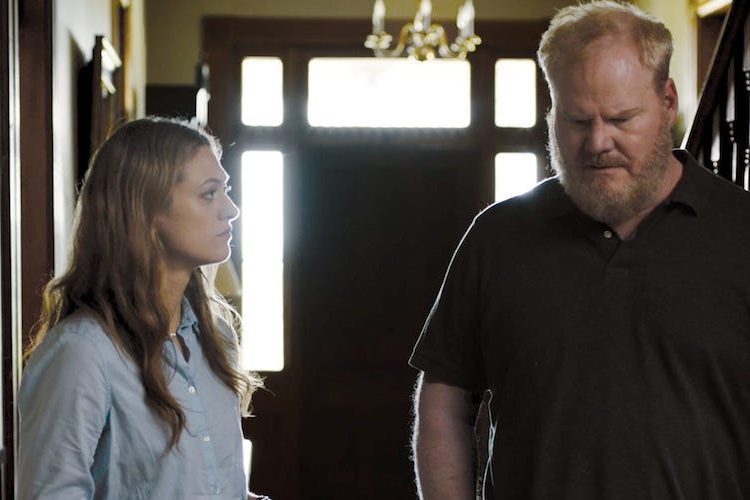
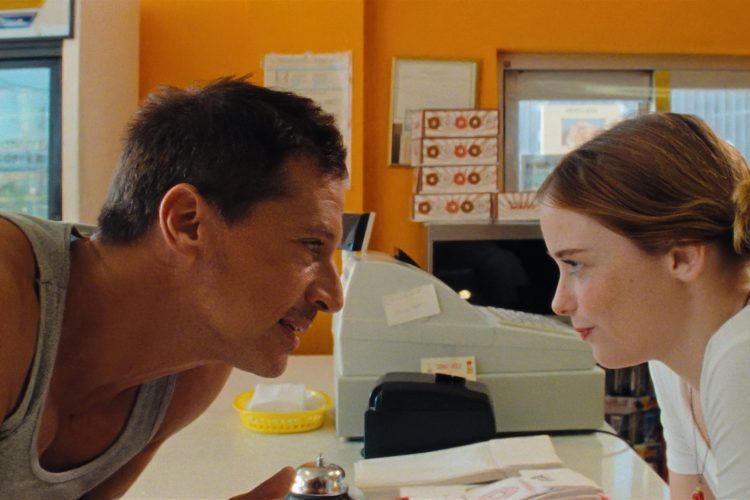
Welcome to the Dollhouse tells the story of twelve-year-old Dawn Wiener, aka “Wienerdog,” (Heather Matarazzo) the most hated girl in middle school. At school she’s tormented by the other students, while her home life as the middle child is not much better. Her older brother, Mark (Matthew Faber), is the consummate high-school computer nerd, obsessed with padding his college resume and having a successful music band. Dawn’s eight-year-old younger sister, Missy, a prancing ballerina in a pink leotard and tutu, has already pirouetted her way to being her parents’ doted-upon favorite. Dawn falls in love with Steve Rodgers, the handsome heart-throb who briefly becomes the lead singer in her brother’s garage band. But Dawn’s plans to seduce him fall hopelessly short, and also complicate her relationship with Brandon McCarthy (Brendan Sexton), a trouble-making classmate with violent rape fantasies. In the midst of Dawn’s awkward attempts to experience sex, Missy gets kidnapped by a neighbor, who turns out to be a pedophile. The family barely notices when Dawn runs away to New York City, especially once Missy is returned, unharmed. As lead Village Voice critic J. Hoberman wrote at the time of the film’s release, Welcome to the Dollhouse is “the funniest, bleakest view of suburban adolescence ever produced in this country.”

Welcome to the Dollhouse is, first of all, a very short film, even for a comedy. The published script contains a mere 83 pages. Dawn, who desperately wants to be popular, is the film’s clear protagonist. The first turning point (26 minutes) occurs when she decides she wants to have sex with Steve. Like her brother’s calculated efforts to have Steve front his band, Dawn believes that sex with the horny Steve will increase her popularity, a plan she develops while talking about him with Mark. After Steve tells Dawn that her club is for retards, this basically puts an end to Dawn’s fantasy.

Dawn’s decision not to give Missy her mother’s message, which leads to Missy being kidnapped by Mr. Kasdan, serves as the second turning point. This happens at 66 minutes. In between, Dawn smashes the videotape of the anniversary party, which includes humiliating footage of Missy knocking Dawn into the kiddie pool, and the police remove Brandon from school. The final act largely concerns Dawn’s attempt to run off to New York and her desperate bid to become loved by her parents and everyone else. It culminates in her “thank you” speech to the school assembly, where Dawn manages to get through it, despite being heckled by the other students. Her consolation is the advice Mark gives her about junior high school: “All of junior high school sucks. High school’s better; it’s closer to college. They’ll call you names, but not as much to your face.” If this act segmentation is accurate, this breaks the 84 minute film into a first act of 26 minutes, a second act of 40 minutes, and a short third act of 18 minutes.

What is unusual about Welcome to the Dollhouse is not its structure but its unusually dark tone. Like suburbia itself, the film’s conventional structure masks a more subversive element, which involves its depiction of very taboo subject matter. That Welcome to the Dollhouse’s most tender moment should be initiated by Brandon’s rape attempt at knife point serves as one of the film’s major ironies. Welcome to the Dollhouse presents the same skewed view of youth and their dysfunctional world as River’s Edge (1987), only the setting has switched to middle school and the New Jersey suburbs. Despite a strong comedic element, Welcome to the Dollhouse is also disturbing, even though it contains no graphic sex, violence, or nudity. At the heart of the film is twelve-year-old Dawn’s obsessive desire to have sex with the handsome, sexually-experienced lead singer of her brother’s band – an idea that gets reinforced by pedophilic content of the songs Steve sings. The very first time Dawn hears Steve practice with Mark’s garage band, he sings “Sweet Candy,” with the lyrics: “I’m taking candy from my baby/ Sweet candy from my baby/ I know you’re daddy’s girl but it don’t worry me/ Won’t you give me some sweet candy.” The title of the film comes from another song Mark’s band plays, which has similar overtones. 

Solondz presents pedophilia as the suburban norm. It is certainly an element in Mr. and Mrs. Wiener’s doting fixation on their dancing ballerina youngest daughter, Missy, as well as shared by their married neighbor, Mr. Kasdan, who dances happily with Missy on his shoulders at the anniversary party, only to kidnap her later and hold her in an underground room. Mary Ellen Moriarty, a fifteen-year-old student, gives a testimonial to the school assembly about how her life was ruined by innocently talking to a handsome older stranger. And Ginger Friedman, Dawn’s precocious classmate, who’s already been sexually involved with Steve, now makes out with twenty-year-old biker types on parked cars. Even Mark composes songs about incest and pedophilia for his band.

In the absence of any sort of sane parental guidance, Welcome to the Dollhouse shows that kids manage to create their own world. They invent a whole language based on crude insults, as well as mores based on power and their own confused and distorted sense of sexuality. Even Dawn, the consummate outcast, dishes out her own share of abuse whenever she can. Like the abused Troy in one of the early scenes in the film, Dawn spews the same name-calling insults to those who are weaker, especially her sister, Missy, and her only real friend, Ralphy, for whom she seems to reserve the greatest contempt. The film shows the intimate workings of this early adolescent world where brief moments of tenderness or compassion are merely setups for even greater cruelty.

Dawn Wiener’s fate is largely determined by her phallic last name. No matter what she does, she will never be able to live it down. As long as she’s an adolescent, she will be plagued by this penile association. As the middle child in the Wiener family, birth order and genetics have also largely determined her fate. She is not smart like her older brother, Mark, nor does she share the good looks that will save Missy. Dawn spends the entire film trying to understand the secret behind “popular.” But no matter what she does, acceptance and popularity somehow manage to elude her.

Dawn literally doesn’t have a clue as to what constitutes appropriate behavior. This is perfectly understandable given the conflicted messages she receives not only from peers, but from her parents and teachers as well. When Dawn sticks up for the downtrodden Troy, he immediately turns on her in order to avoid further stigma. When Dawn complains about Brandon copying her test, Mrs. Grissom arbitrarily punishes both of them. The teacher also berates Dawn for being an undignified “grade grubber.” The situation at home is not much better. Dawn calls Missy a “lesbo” for bothering her during dinner, which results in Dawn being punished for not apologizing and telling her sister that she loves her. Dawn also gets punished later for refusing to tear down her Special People’s Clubhouse. Her parents withhold her dessert as punishment, which takes on a sadistic quality when they allow Mark and Missy to split Dawn’s piece of chocolate cake and eat it right in front of her.

Dawn’s reaction is to mimic the behavior she sees and hears around her. She calls Missy a “lesbo” because that is what Brandon has called her. She calls Ralphy a “faggot” when she’s angry because that’s what she heard Brandon call him. But she blurts out other inappropriate remarks as well. For instance, in one of the rape scenes with Brandon, he asks her whether she wants to smoke. She answers, “No. I just don’t feel like it. But I think marijuana should be legalized.” The fact that Dawn expresses an opinion about the legalization of marijuana in this context is, of course, ludicrous. Perhaps she blurts it out due to fear and nervousness, but whatever the case, her inappropriate remark provokes Brandon to call her a “cunt.” Dawn’s reply – “I don’t mean to be a cunt” – is both funny as well as painfully sad in its naiveté.

Mark, on the other hand, believes he has everything all figured it out. Being a nerd at least allows him to cope, which is more than it is possible to say about Dawn. Mark’s rigidity has allowed him to reduce the complexity of the world to a simple formula. He’s become adept at computers and maintains the single focus of trying to get into the best college. Mark sees things only in terms of his college resume. The truth of the matter is that he’s actually not much more socially adept than Dawn – at least based on his interactions with Steve and his girlfriend, Naomi. When Dawn asks him if he ever thinks about girls, he has a pat answer: “What, are you kidding? I want to get into a good school. My future’s, like, important. And besides, none of the girls at school are that pretty anyway.” 

The other interesting character in Welcome to the Dollhouse is Brandon McCarthy. When we first encounter Brandon, he and his friends force Troy into admitting he’s a faggot. Brandon has become the class bully because he’s been left back in school, which is why he tries to copy Dawn’s test answers, even though she’s not a very good student either. Brandon and his friends also pick on Dawn and Ralphy at the convenience store, but Dawn has her own list of insults to return, including calling Brandon a “retard.” This label causes Brandon to threaten to rape Dawn after school. In the rape scene, Brandon actually reveals to Dawn that his brother is retarded:

BRANDON: You know I’ve got a brother?
DAWN: No. I never knew that. What grade’s he in?
BRANDON: He’s not in any grade. He’s retarded.
DAWN: Oh.
Dawn rises, starts walking over toward Brandon.
DAWN: I’m sorry.
BRANDON: There’s nothing to be sorry about. He’s a tough kid. He could beat you up if he wanted.
DAWN: I’m sorry – I mean . . . yeah.

The word “retard” has a special meaning for Brandon because his personal experience with mental retardation has altered his understanding of this word as an insult. Brandon is also sensitive to being labeled a retard since he’s been left back in school. Brandon freely uses other insulting words, such as “faggot” and “lesbo,” but not “retard.” When Dawn later visits Brandon’s house, she actually meets his retarded brother, Tommy, who offers her a doughnut before being whisked away by Mr. McCarthy. The experience now personalizes the word for her as well.

Brandon’s retarded brother and his impoverished background (which we only glimpse toward the end of the film) allow us to see Brandon’s more sympathetic side. Dawn also sees this aspect of him when she overhears Brandon ask the popular Cookie why he wasn’t invited to her swim party. Cookie’s reasoning is as arbitrary as Mrs. Grissom’s. She tells Brandon that there are an even number of boys and girls, and that this symmetry would be violated if he came. His response is to try to bribe her by giving her his cookie from lunch. But Cookie dismisses his offering: “But Brandon . . . this didn’t even cost anything,” which points to the fact that Brandon’s class background makes him just as much of a social outcast as Dawn.

Solondz’s reliance on black comedy in Welcome to the Dollhouse allows him to create vivid character portraits in a short amount of time. Like the best satiric sketches on Saturday Night Live, Solondz works with certain easily recognizable types, which he pushes to extremes for comedic effect. His characters are highly stylized rather than realistically rendered, recalling the exaggerated quirkiness of Lane and Feck from River’s Edge. But Solondz’s ironic characterizations are much funnier, which provides the cover for him to flip-flop continually between serious emotional drama and total farce.

Solondz’s own strengths as a filmmaker have to do largely with his substantial talents as a screenwriter, especially his knack for being able to create memorable original characters such as Dawn Wienerdog. Solondz’s films privilege script and performance over style, which is hardly surprising for someone who works mainly in comedy. His mischievous sense of deadpan humor restored a strong element of entertainment to an independent tradition that downplayed such narrative pleasure largely because of its tainted associations with commercialism and Hollywood. That a major studio would refuse to distribute his next film, Happiness (1998), only goes to prove that Solondz’s vision still remains, on some very fundamental level, far too troubling to be considered mainstream.

Posted 30 June, 2008

Mister Lonely


It’s a sad comment on the state of indie film distribution and exhibition that most viewers have had to wait an entire year before seeing some of the films that played at last year’s Cannes Film Festival, in particular, Harmony Korine’s Mister Lonely (2007). Korine’s first feature in eight years opened theatrically yesterday through IFC First Take and is currently available on cable through VOD.

When asked about the commercial prospects for Mister Lonely, Korine gave his usual tongue-in-cheek response: “I remember thinking Gummo would be embraced by the public in much the same way as Bambi was when it first came out. I am always wrong about such things.” Korine has actually received more positive press than ever before – generally favorable reviews in the New York Times and Village Voice. His picture also graces the cover of the latest issue of Filmmaker, which features an informative interview with Korine by Michael Tully. In the intervening years, Gummo (1997) has been grudgingly acknowledged for the brilliant piece of filmmaking it is – as if anyone has forgotten the venomous attacks the film engendered upon release. The inclusion of Gummo in my book on independent screenwriting was in some ways a critical provocation – an effort to describe the associational, non-causal structure of the film – in the face of such hostility.

Much has made of Korine’s substance-abuse problems and long road to recovery, suggesting that Mister Lonely presents a poignant, more mature side of the once bad-boy filmmaker. Korine’s personal breakdown, stint in rehabilitation, and subsequent comeback have been mentioned in virtually every article that appeared prior to the film’s release. And indeed it does seem relevant to Korine’s twin story of unrequited love between two celebrity impersonators and the faith of a group of nuns in their ability to fly. Sadly, both love and faith fail to save these characters from “a world that’s patiently waiting to take us away.”

Celebrity status came early to Korine. The self-taught filmmaker wrote the screenplay for Larry Clark’s Kids while a nineteen-year-old skateboarder. He made Gummo at twenty-three, an amazing accomplishment that was recognized by notable filmmakers, such as Werner Herzog, Gus Van Sant, and Bernardo Bertolucci, but not by most critics and moviegoers. Korine’s smart-aleck put-ons in interviews turned much of the media establishment against him. His appearances on David Letterman, while now staples on YouTube, were a form of exploitation, taking advantage of a young artist who made the fatal mistake of letting all the attention go to his head. Speaking about this, he told Dennis Lim, “It’s one thing to understand it intellectually, but another to live through it.”

Korine hasn’t lost his ability to embellish personal events in his life. In an interview with Lim in last Sunday’s New York Times, he talks about a fisherman’s wife walking an “invisible” dog and comments, “I mounted this leash on the wall and I heard it bark. I swear to you.” You have to admit it’s pretty comical when street magician David Blaine ends up being cast in the role of the straight man. In an interview with indieWIRE, Eric Kohn asks Korine whether he fabricated the story about “traveling with an Amazonian tribe called the Malingerers and searching for a mythological fish.” Korine answers, “Of course, this is the truth. In fact, I’m planning another trip back there soon. One of the members just gave birth to a twelve-pound baby with a fully grown tooth, and I am the godfather. Apparently, the child has been given my name.” Not since Andy Warhol, has anyone used the celebrity interview for such subversive ends.

Reportedly made for $9 million, and partially financed by French fashion designer Agnès b, Mister Lonely sounds even crazier than it actually is. A lonely Michael Jackson impersonator (Diego Luna) runs into a Marilyn Monroe wannabe (Samantha Morton) in a Paris café. She impulsively invites him to a Scotland commune of other impersonators – “a place where everyone is famous” – where she lives with her husband Charlie Chaplin and daughter, Shirley Temple. Other impersonators residing there include: Madonna, Sammy Davis Junior, Abe Lincoln, Buckwheat, James Dean, the Three Stooges. the Pope, Queen Elizabeth II, and one storybook character, Little Red Riding Hood. Set up as a utopian refuge, problems soon arise. The sheep wind up getting a livestock disease and have to be slaughtered. Chaplin becomes jealous over Marilyn’s obvious affections for Michael – she hugs him in the swimming hole – and becomes extremely abusive toward her. Marilyn tells him, “You know Charlie, sometimes when I look at you, you seem more like Adolph Hitler than Charlie Chaplin.” The impersonators decide to put on a talent show, which flops, leaving them all distraught. The situation with Marilyn ends in tragedy, causing Michael to return to Paris, where he abandons his life as an impersonator.

Korine creates another parallel story line involving a priest named Father Umbrillo (played by Werner Herzog), and a group of blue-robed nuns in Panama. Umbrillo is as much a dictator as Chaplin. In an early improvised scene, he scolds a poor man who turns up at the airport each day with flowers for his wife, who has left him. Umbrillo insists that the man admit his sins and repent, reducing him to tears. While airlifting food to a village, a nun suddenly falls out of the small plane – a truly dazzling sequence that by itself would make the film worth seeing. The subsequent shots of the nun falling through the air, coupled with the eerie sound of the wind, makes it seem as if we’ve suddenly entered a dream. The sound cuts out at one point; the nun prays, and a miracle occurs, as she eventually lands safely. Even her stagger upon trying to walk conveys the intensity of the experience, which far exceeds its seeming reference to popular culture. The plot thread involving flying nuns mirrors and reinforces the main plot with the impersonators.

Like many young independent filmmakers, Korine has an ambivalent relationship toward the script (which he co-wrote with his brother Avi). He told Tully: “I guess I have the script as just an outline, but the script is just words on paper – it’s just a start, a jumping-off point, at least for me. Everything is about the feel and about creating an environment. What I try to do, and what I’ve always tried to do, is, in some ways, mimic [the characters’] story [in the filmmaking]. Create a kind of universe. These characters are like chemicals, and you want to take those chemicals, put them in a bottle, shake them up, and then document the explosion.” Later in the same interview, Korine reiterates his lack of interest in straight narrative: “I’m starting to realize that when you play with narrative, or conventions of storytelling, it upsets a certain kind of person. Which I understand, you know, because you become interested in watching things with a beginning, a middle, and an end. Things that don’t necessarily shift in tone. But I don’t really make those types of movies.”

The types of characters and situations toward which Korine gravitates involve incongruities. You don’t have to look beyond Gummo’s Bunny Boy – a skinny, androgynous skateboarder with large pink rabbit ears – to find a more striking example. Mister Lonely begins and ends with a shot of the Michael Jackson impersonator. He wears a surgical mask and rides a clown bike in slow motion with a stuffed monkey with wings attached to the vehicle. This scene becomes emblematic of the film, but there are many other examples. For instance, Jackson performs to rap music in an old-age home, exhorting the elderly, “Don’t die. Live forever.” At the commune, James Dean hangs out with Little Red Riding Hood. As he rides a pony, Buckwheat, who sports a gigantic Afro, expresses his love of chicken breasts – “naked women” and “naked chicken.” The Pope proposes getting drunk for the sake of the soon-to-be-slaughtered sheep. He and the Queen later share a bed. The foul-mouthed Abe Lincoln blames the Three Stooges for the problems they’re having in setting up the talent show. He later can’t understand why the Stooges should go on stage before Madonna. A group of them decide that the Pope stinks, leaving Buckwheat to wash his back in an outdoor bathtub. When the Queen appears to speak following their performance, Korine makes her look more like the Infant of Prague, which is exactly the kind of silly joke that’s at the heart of Korine’s sense of humor.

Just as Korine employs Ron Orbison’s “Crying” to express the sadness of the dead cat Foot Foot in Gummo, he uses Bobby Vinton’s “Mister Lonely” as another pop song to convey the tragic feelings of estrangement felt by both the Michael Jackson and Marilyn Monroe impersonators, which they’re unable to bridge. That Korine would use Michael Jackson as a lead character is risky in and of itself these days. But it shows that Korine genuinely identifies with Jackson’s desire to stay a child forever and never grow up. When Michael Jackson tells his agent of his desire to quit being an impersonator, he counters, “Why do you want to be like everyone else. They’re all miserable.”

In a celebrity culture, ordinary folks are miserable because only fame really matters. Most people are rendered insignificant otherwise, and the culture makes us want to be other than ourselves, which is precisely what the Michael Jackson impersonator says in voiceover at the beginning of the film. Korine tackles issues of personal identity head on in Mister Lonely, which is best expressed in the lyrics of the title song: “I’ve been forgotten, yeah, forgotten, Oh how I wonder how is it I failed.” It’s hard not to read this and the entire film as a personal statement. Who could imagine Korine would make a film that is so naked and heartfelt that it has the raw emotional feel of a suicide note. And if you allow yourself to succumb to its considerable magic – thanks largely to the sensitive and spirited performances of both Luna and Morton – it might even leave you a bit teary-eyed.

Posted 3 May, 2008

En la Ciudad de Sylvia

I first stumbled upon the work of Josè Luis Guerin last summer at the Venice Biennale, where his installation Women We Don’t Know was shown in the Spanish pavilion. It happened to be one of the first things I saw in Venice, and I later regretted not being able to spend enough time with it. David Bordwell mentioned En la Ciudad de Sylvia (2007) on his blog when he saw Guerin’s feature at the Vancouver Film Festival and later wrote a brilliant and very detailed analysis involving the film’s use of point-of-view shots. As a result, I looked forward to catching the work when it played recently at the Wisconsin Film Festival. There were many extraordinary films at this year’s festival, including Jia Zhang-ke’s Still Life and Alexander Sokurov’s Alexandra, but the most rigorously formal one turned out to be En la Ciudad de Sylvia.

En la Ciudad de Sylvia is a story about a young artist who comes to Strasbourg, checks into a hotel, scopes out the women at outdoor cafes and then proceeds to follow one of them through the streets of the city. The film is highly abstract and completely obsessive. It’s about observing women and scrutinizing human gestures, about images and sounds rather than plot and dialogue (of which there is very little). Guerin is interested in an observational cinema that blurs the lines between narrative, documentary, and avant-garde practice. There’s a structural aspect to the film, reminiscent of Chantal Ackerman (who was herself influenced by American structural film), in which repetition becomes an important element. Certain key locations reoccur several times. As the narrative progresses, peripheral characters or their “traces” also reappear – an African street peddler who wears an umbrella hat, a Pakistani flower vendor, a female street person who sprawls on the sidewalk, and a young woman who bums cigarettes. Drinks repeatedly are dropped or spilled in cafes. Images are reflected by mirrors and glass, which will be thematically reinforced later on by the lyrics of a Debbie Harry song. Like Ackerman or Warhol, Guerin includes what would be considered extraneous in most other narrative films.

Scenes in En la Ciudad de Sylvia represent chunks of time in which aspects other than the narrative are given equal weight. For instance, the opening scene in the hotel room cuts to someone running down a street where we see a sign for the Hotel Patricia. The young protagonist walks out of the hotel and starts down the narrow street. He stops and checks a map, then changes direction and comes toward us. The shot continues as a bicyclist does the same, and two children, who speak English, head in the opposite direction, followed by a flower peddler who hobbles down the street after them, while strollers and a bicyclist cross in a perpendicular direction at the base of the street. Guerin often holds the shot beyond its point of narrative interest. After the young artist decides to shadow a woman in a burgundy dress, we watch the waitress wipe the table and a trolley move through the background. Later, after the woman and protagonist pass a homeless woman, she tosses a bottle across the street. It rolls past the bottom of the frame, while the rattling sound continues after it disappears, emphasizing Guerin’s interest in the interplay between on- and off-screen space.

The film’s opening scene cues us to Guerin’s more formal concerns. A title indicates “first night.” The light changes during a course of the shot of a hotel room. We see a still life consisting of a map, hotel key, a pencil, and a coaster for “Les Aviateurs.” We hear the sound of cars. In another shot, the still life expands to include fruit, an alarm clock, and sketchpad. Leaves sway outside the window; church bells ring. A young man, who has long straggly hair and wears a vest (Xavier Lafitte), sits in bed. He seems lost in his thoughts or concentrating on something. Sounds of traffic and chirping birds can be heard from outside. The young man remains poised with his pencil, then begins to write feverishly in the notebook. He gets up and moves offscreen. A maid asks whether she can make up the room, causing the scene to cut abruptly. After leaving the hotel, the protagonist heads to an outdoor café. He tries to start a conversation with a woman who reads a book at a nearby table, but she refuses to acknowledge him. A waitress brings coffee, but he causes her to spill it, as the scene cuts to blackness.

After a title that indicates, “second night,” we see shadows cast on the walls of his hotel room as the young man lies in bed. The scene cuts to a crowded outdoor café outside the Conservatory for Dramatic Art on a sunny day. Only after awhile do we notice our protagonist sitting in the background. We observe small details, such as a blond woman playing with her hair. The artist draws and drinks a beer. He fixates on an attractive waitress, whom he also sketches, adding the written notation that this was done “in the city of Sylvia.” An African peddler tries to sell a wallet for five Euros. The waitress gets into an argument with customers over their order. She drops the coffee, which crashes to the ground, as the artist watches with great interest. He has a sad look of longing and desire. With his intense blue eyes and pasty face, one could easily imagine him as a mime. His attention shifts to a group of women. One of them is the same woman from the day before. They make eye contact. Musicians begin to play violins. A brooding man with glasses, whom we’ve observed earlier, suddenly exclaims to the woman next to him, “No.” She shifts her gaze and then looks back at him. He continues, “I don’t think so . . . but I’ll think it over.” This comes as something of a surprise because we didn’t realize they were together as a result of an earlier framing. The artist eventually notices the reflection of a woman in a burgundy dress (Pilar López de Ayala), who gets up to leave. After much deliberation, he knocks over his beer and chases after her.

Like Matthew Buckingham’s A Man of the Crowd (2003), En la Ciudad de Sylvia becomes a game of pursuit. As the young man stalks the woman through the downtown streets, a tram comes between them, causing us to view her and then him through the passing windows. At one point, he calls out, “Sylvie?” In a frontal shot of the two of them walking, her eyes momentarily dart sideways, suggesting that she’s aware of his presence. The sound of their rhythmic walking recalls scenes from films by Béla Tarr and Gus Van Sant. The woman, who talks briefly on a cell phone, eventually ditches the young man. In a square, the rings of a cell phone cause him to stare at an upstairs window where a dress on a hanger flaps in the breeze. The artist backs up into a fruit stand. The African peddler tries sell him various items and a young woman wearing a backpack tries to borrow a cigarette, but he’s too absorbed in watching a woman, in only her underwear, blow dry her hair in a window above. Behind him we see the woman whom he thinks is Sylvia leave a shop. 

As church bells sound, the woman heads for a trolley stop. The young man stands next to her on the platform where an attractive model puts her finger to her lips in an advertising display. Once inside the trolley, he finally speaks to the woman. Their conversation takes place on the tram with the city gliding behind them, while the sunlight shifts on their faces:

YOUNG MAN: Sylvie . . . Sylvie?
WOMAN: What is it?
YOUNG MAN: Don’t you remember?
WOMAN: We’ve met?
YOUNG MAN: “Les Aviateurs,” six years ago.
WOMAN: What?
YOUNG MAN: “Les Aviateurs.”
WOMAN: What’s that?
YOUNG MAN: The “Les Aviateurs” bar, behind the cathedral.
She takes off her sunglasses.
YOUNG MAN: I still have the map you drew on a napkin. You don’t remember? No?
WOMAN Yes, yes, yes.
YOUNG MAN: The “Les Aviateurs” bar.
WOMAN: Sounds familiar.
YOUNG MAN: You were with two friends from the Conservatory. The College of Dramatic Art. You don’t remember?
WOMAN: I’m sorry. I don’t understand.
YOUNG MAN: You entered the Conservatory six years ago, right?
WOMAN: You’re mistaken. I’ve been here a year.
YOUNG MAN: But you are Sylvie, aren’t you?
WOMAN: No.
YOUNG MAN: But you’re Sylvie, right?
She laughs and shakes her head.
WOMAN: No. . . No
YOUNG MAN: You aren’t Sylvie?
WOMAN: No, you’re mistaken.
She laughs.
YOUNG MAN: What?
WOMAN: Sylvie. You’re mistaken.
YOUNG MAN: What a disaster! . . . What a disaster! I made a mistake.

The young man seems completely devastated. Have they indeed met previously? Because it’s left ambiguous, the scene has strong echoes of Last Year at Marienbad. The tenor of the conversation switches, however, as she chastises him for following her. When the woman eventually gets off at her stop, he tries to prolong their conversation, but she puts her finger to her lips, mimicking the model in the advertising poster.

At Les Aviateurs, the young man tries to pick up a different woman at the bar, but she ends up dancing with a tall guy instead. After a title indicating “third night,” we view the artist in bed with a woman. He stares at her body while she sleeps. We see a shot of the street corner where the remnants – bottles and refuse – of the homeless woman remain. As a heavy-set woman waddles toward us, another with blond hair runs from the direction of the camera, kicking the same bottle we watched the homeless woman toss into the street. The flower vendor hobbles toward us. A car comes down the street with music blaring. Another man inadvertently kicks the bottle as he passes. We return to the shot of the street with the sign for the Hotel Patricia. A woman carrying a baguette walks down the center of the street, away from the camera. In another shot in front of large graffiti, we hear sounds of earlier violin music and the young woman again asking to borrow a cigarette. In another shot, the African peddler passes through the frame. The young man returns to the Conservatory café, flirts with the waitress, imagines he sees Sylvie again, and pursues the woman to the tram platform, suggesting that his romantic obsession is an endless cycle.

I apologize for providing such detailed description, but En la Ciudad de Sylvia is precisely about details – specificity rather than generality – which is why many of the reviews I’ve read have a tendency to talk around the film. While many critics point to Hitchcock, Bresson, and Murnau as some of the film’s obvious references, I would also cite Maya Deren, whose avant-garde classic Meshes of the Afternoon (which she made with Alexander Hammid) shows the power of the imagination to overpower reality, imbuing the everyday world with the magic of the dream. Titles divide the film into three distinct “nights,” even though much of the action takes place during the “day.” Guerin’s emphasis on night and shots of the young protagonist at the hotel provide some basis for the hallucinatory quality of much of what transpires. The film creates tension between the documentary-like recording of the streets and cafes of Strasbourg and the protagonist’s own heightened memories.

Looked at in narrative terms, one might ask a number of questions that have to do with character motivation and believability. If Sylvie represents such an obsession, why has the young artist waited six years to try to find her? Where has he been all this time? If Sylvie knows she’s being followed by a stranger, why doesn’t she seek help? Guerin seems completely uninterested in providing such answers. Like much of art cinema, the film relies on ambiguity to create the gaps in the viewer’s own imagination, which becomes a strategy for engaging the viewer. We observe the world of Strasbourg, gradually becoming obsessed with its inhabitants and the city’s rhythms in a similar manner to how Guerin’s voyeuristic protagonist apprehends it. He is attuned to every nuance of the females at whom he gazes. For him, their smallest gesture carries an erotic charge. The film employs the sexualized look of fashion and advertising, but Guerin undercuts this by including street peddlers and homeless people.

Guerin’s structural narrative is interesting for demonstrating how little it actually takes to create a story. The plot easily could be summarized in a sentence or two. Natural sounds and bits of overheard conversation position us as eavesdroppers. Character, as in the case of Sylvie, is extended to include nearly every woman we see, as well as a sense of place. The film’s sound design plays a crucial role. When the woman in the burgundy dress stops in a corner doorway and talks on her cell phone, voices of passersby fade in and out, while we only see the movement of the woman’s lips. In place of the dialogue-driven script, Guerin substitutes visual storytelling and formal concerns, so that, for the attentive viewer, the pleasure of watching En la Ciudad de Sylvia involves participating in an elaborate and complex perceptual game.

Posted 21 April, 2008

Shotgun Stories


In Charles Burnett’s family drama To Sleep With Anger (1990), Harry, an old friend from the South, visits an African-American family in South Central Los Angeles and manages to wreak havoc in the process. At one point Harry disputes the fact that Hattie, a former prostitute who has found religion, is now a different person. Shotgun Stories (2007), the stunning debut feature by Jeff Nichols about a family feud involving two different sets of half-brothers who have the same father, would seem to side with Harry by challenging the notion of personal transformation or the religious belief in redemption. Despite the fact that their father has managed to turn over a new leaf, he’s left behind in smoldering cauldron of hatred, as embodied by Son Hayes (Michael Shannon) whose scars on his back suggest the permanence of deep psychic wounds. Shotgun Stories, which was produced by David Gordon Green and Lisa Muskat, nominated for the John Cassavetes Award, and played at the Wisconsin Film Festival, would seem to rest on the biblical premise that human actions have consequences.

Shotgun Stories begins with Son Hayes sitting in a semi-vacated bedroom in the scruffy landscape of rural southeast Arkansas. His two brothers – Kid (Barlow Jacobs) camps in a tent in the backyard, while Boy (Douglas Ligon) lives out of his truck – are dirt poor. As Son laments one evening as they hang out together in town, “We don’t own the square root of shit.” When Son, an inveterate gambler, announces to Kid that his wife Annie has left him, Kid welcomes the opportunity to move into the house. Their mom turns up one evening with news about their father’s death. At Son’s instigation, the three brothers interrupt the outdoor funeral service. Son tells the assembled second family, “This is the same man that ran out on us, that left us behind to be raised by a hateful woman. He made like we were never born. That’s who this man was, and that’s what he’s answering for today.” He then spits on his casket, setting in motion the ensuing family feud.

Referring to her born-again husband, the second wife tells her son, Cleaman (Michael Abbot Jr.), “He was a different man back then,” but her other son, Mark, comments about Son and his two brothers, “Those three are like a pack of dogs. You can’t expect a dog to have manners,” suggesting the class difference that contributes to their enmity. Cleaman indicates that he has two kids, and that his other brothers – Stephen and John – don’t need to be mixed up in this. Son also has a young son, Carter; Kid has a girlfriend, Cheryl, whom he plans to marry; Boy serves as a basketball coach to young kids, even if the court sits plunk in the midst of a vast open field. One of his players innocently asks Boy, “Did you know that someone wrote ‘suck it’ on the back of your van?”

In Michael Shannon’s compelling yet understated portrayal of Son, he’s a walking time bomb – animosity seems to flow through his veins, inflect his slow gait, and impede his capacity for speech. Son’s co-workers at the fish farm where he’s employed speculate on the shotgun scars that cover his back. There are rumors that they result from robbing a liquor store or messing with someone’s wife. The conversations in Shotgun Stories are for the most part composed of long silences and small talk, with Arkansas basketball and basketball trivia as favorite topics. Son and Kid later discuss love and faithfulness in a scene that seems right out of a film by David Gordon Green, whose influence on other young filmmakers has become markedly evident lately. Son’s advice to Kid – to find a woman you love and love her – might carry more weight if Son wasn’t already separated from his wife.

Shampoo, a local drug dealer who wants to park his car on their property, is very much like Harry in To Sleep With Anger in the sense that he exploits the inherent tensions of the situation. He stokes the flames of resentment by suggesting to Son that Mark plans to kick their butts. When the brothers meet in town, there’s a confrontation in which Son punches Mark, causing a major ruckus that Boy tactfully avoids. Son later tells him, “That’s the last time you stay out of a fight.” Cleaman attempts to make peace. Son merely responds, “I don’t like you. I don’t like your family.” He threatens to retaliate if anything happens to his brothers.

Boy’s dog dies of a snakebite, but Kid learns from Shampoo that Mark was behind it. He grabs a wooden stick, tracks down Mark, and brutally beats him. We see a knife being flashed, and John and Stephen rushing to aid their brother. Both Mark and Kid end up dead. Once again, Shampoo relays the news that Stephen and John were actually involved. Son tells Boy, “They can take our daddy, good riddance, but they’re not going to take Kid.” The feud escalates from there.

Shotgun Stories is very much a male story. The women merely stand by helplessly, unable to prevent the endless cycle of revenge. Cheryl asks, “Why is this happening?”At least Annie has the good sense to flee. When a person literally has nothing, hatred and an appetite for revenge can easily serve as one’s identity. That’s the case with Son, who places the blame squarely on his mother. In a wide shot, he tells her, “You raised us to hate those boys and we do. And now it’s come to this.” There’s no love or loyalty there, just a residue of inherited anger and hatred that will no doubt be passed on to Son’s own boy, Carter.

Despite its concern with violence and revenge, the film provides an even greater emphasis on the everyday. Nichols, who grew up in Little Rock, uses an anamorphic lens and the larger aspect ratio to capture the desolation of southeast Arkansas – its endless cotton fields, dirt roads, ramshackle houses, and empty main streets. Adam Stone’s striking cinematography leaves an indelible impression of this unforgiving landscape, creating a tight nexus between character and place. This has always been both the strength and rationale of a regionally based independent cinema, which Shotgun Stories so masterfully epitomizes.

Posted 11 April, 2008

Stuart Gordon: Stuck


Stuart Gordon (Re-Animator), who went to school here in the late 60s and taught at the university as artist-in-residence several years ago, will return to screen his latest film Stuck (2007) tonight in the main theater of the Orpheum at 11PM as part of the Wisconsin Film Festival. Based on a shocking true event that occurred in Fort Worth, Texas in 2001, Stuck tells the story of how fate and circumstance can transform a seemingly ordinary person into a frightening monster. While many horror fans will no doubt appreciate Stuck for the way it deftly plays with the conventions of the genre, it strikes me that Gordon’s film – with its overt reference to George Bush – uses the story as thinly disguised social and political criticism. In doing so, Stuck manages to find a perfect balance between dark humor and the grotesque, while exhibiting the relentless quality of a nightmare. 

Brandi (Mena Suvari) is a nurse’s aide in a retirement home. She’s the personal favorite of one of the elderly men who messes himself continually. The administrator, Mrs. Petersen, thinks it’s time to get rid of him, but Brandi embodies the selfless caregiver. Petersen, played by Carloyn Purdy-Gordon (the director’s wife), dangles the NA captain position as bait to manipulate Brandi into working on the weekend. The stress of ministering to others all day creates a need for Brandi and her co-worker friend, Tanya (Rukiya Bernard), to unwind at a nightclub after work, where Brandi’s boyfriend, Rashid (Russell Hornsby), slips a pill into each of their mouths. “Trust me,” he tells them.

Tom (Stephen Rea) is down on his luck. A former project manager, he’s fallen on hard times. Tom slips out of a flop house where he’s unable to pay his rent. He escapes with his clothes, leaving his suitcase behind. His trip to the employment services agency becomes a exercise in futility. For some reason, Tom is not in the computer system, which becomes its own self-justification for failing to help him. A homeless man named Sam befriends Tom, giving him something to drink and a shopping cart for his clothes. Gordon’s humor is such that Sam warns Tom to be careful if he plans to sleep in the park – not because of criminals, but because of the police, who congregate at the nearby doughnut shop. Sure enough, Tom is awakened by an unsympathetic cop, who forces him to move on – an event that will have profound implications.

The parallel plot threads collide to create the film’s inciting incident. On her way home from the club, Brandi, high on alcohol and drugs, inadvertently slams into Tom as he crosses the street with his shopping cart, leaving her victim impaled on the broken windshield of her car. Sam sees the car pass with the body and tries to tell the police who are detaining him, that “the guy was stuck like a goddamn bug.” This is pretty much how Brandi decides to view Tom. Rather than stopping and calling for help, Brandi keeps going, with the bloody body still stuck on her hood. She drives to a hospital, but the sound of a garage door opening scares her off. Brandi thinks of calling 911, but doesn’t. She becomes terrified that she’ll get caught and won’t get her promotion. Brandi drives her car into her garage and ignores Tom’s desperate pleas to help him. Instead, she blames her victim: “You should have watched where you were going.” In a case of sheer projection, she later screams at him, “Why are you doing this to me?”

Brandi confesses to Rashid what happened, but when he finds out she hit a homeless person, he tells her, “Nobody’s gonna give a shit.” In an attempt to reassure her, he admits that he’s done a lot worse than that. Rashid waxes philosophical as he’s about to have sex with her, “Anybody can do anything to anyone and get away with it. I mean anything. I mean, fuck, look who’s in the White House right now.” Brandi makes love with Rashid while rap music mixes with their groaning sounds, as the camera tracks from the garage to a red lava lamp that can be seen through the bedroom window. Her lovemaking sounds turn into screams as images of Tom’s head exploding through the windshield glass and his pleas for help alternate with Rashid’s face.

Once the traumatic event happens, Brandi elicits no pangs of regret. Her sole instinct is to survive, which mirrors Tom’s feverish attempts to extricate himself from the torture chamber of Brandi’s garage – it’s almost as if she’s turned into a menacing serial killer. In fact, she behaves like one. When Tom manages to honk the horn, Brandi promptly whacks him on the head with a board to get him to stop in order to avoid getting caught. Seeking help to dispose of the body, she later turns up at Rashid’s house, but discovers him in bed with another woman. Brandi takes vengeance with an almost pathological fury. She pulls her hair, smacks the other woman with a frying pan, and kicks her naked body into the hall.

Gordon teases the viewer with various near attempts at intervention. A cab driver almost finds Tom in the garage as he goes to investigate the honking horn. A Latino kid sees the moving body through the garage window and manages to get his mother to the crime scene, but the father becomes fearful they’ll get deported. Tom almost succeeds in using Brandi’s cell phone to get help. Tanya nearly discovers Tom in Brandi’s garage. The film moves toward a hellish climax, which finally pits perpetrator and victim in a consummate battle for survival.

In dealing with a story inspired by a true event, Gordon attempts to penetrate the bizarre mental processes of his unglued protagonist. In a sense, he’s asking how human beings can be capable of such horrific behavior. For Gordon, the horror genre becomes the appropriate vehicle to probe such issues. When asked in an Isthmus interview whether the fact that Stuck is based on a true story turned out to be limiting, he responded, “No, I think that the thing that I realized is that stuff that really happens is much stranger than anything you could dream up, and more horrific, really. Things that people do to each other are much more disturbing than typical monsters.”

Posted 5 April, 2008

Chop Shop

Ramin Bahrani’s first feature Man Push Cart (2005), which played opening night at last year’s Wisconsin Film Festival, explores the world of a Pakistani pop musician, whose immigrant status has forced him to operate a push cart in Manhattan. More than anything, it’s a meditation on the streets of New York City at night, as Bahrani emphasizes the cinematic details of this milieu over plot in order to create a kind of poetic realism. His lead actor from Man Push Cart, Ahmad Razvi, now operates an auto body shop in the Willets Point section of Queens, right near Shea Stadium, where the New York Mets play. But Bahrani’s second feature, Chop Shop (2007), which premiered at Cannes and will also play at this year’s Wisconsin Film Festival, focuses not on Razvi, but on a scrawny twelve-year-old Latino kid, Alejandro (Alejandro Polanco), who works at another chop shop where the owner allows him to live upstairs. Bahrani eschews expository background information about Alejandro, or Ale, as he’s called in the film. Suffice to say that Ale’s a survivor, the type of kid who can’t be held down, no matter what obstacles life hurls in his path.

Ale concocts a scheme to buy a lunch truck, so that he and his sixteen-year-old sister, Isamar (Isamar Gonzales), can control their own destinies. It represents his ticket out of the chop shops and her escape from having to turn tricks with truckers, a painful discovery that Ale makes one night during the course of the film. Whereas some plot elements are initiated and not necessarily developed in Man Push Cart, Bahrani does the same in Chop Shop – the broken lock on the door, Ale’s hiding place for the money, Ale’s suspicions of Lilah – in order to build a sense of impending catastrophe. Ale attempts to navigate a treacherous world with an optimism that – as might be expected of someone so young – is also remarkably naive. Ale is only a youngster after all, even if he races around the neighborhood with the bravado of an ultimate fighter.

Ale moves from day laborer, to hawking candy on the subway, to steady work in the chop shops, to selling DVDs, to stealing hub caps from the stadium parking lot, to more serious crime. As a result, the film moves forward with the inevitability of a Greek tragedy, but Bahrani wisely ends his film on a metaphor that’s similar to one that Charles Burnett used throughout his film of a South Central family under siege, To Sleep With Anger. Bahrani, who is Iranian American, grew up in Winston-Salem, North Carolina and went to film school at Columbia, collaborates with cinematographer, Michael Simmonds, to make a film that never lapses into sentimentality. The two of them are much more interested in capturing the look and texture of this underground economy with closely observed poetic images, such as a blue rubber sandal floating down a flooded street or a black pit bull attacking a car jack with menacing ferocity.

Much of the film involves Ale’s relationship with Isamar. Although he’s much younger, Ale is the one who gets her a job and a place to stay above Rob’s chop shop. Isamar complains about the cramped quarters, but Ale counters that it has a bed, microwave, and refrigerator, which is stocked with bottles of grape soda. When Ale observes Isamar struggling at her job – she’s lazy rather than ambitious like him – he also comes up with a master plan. What’s interesting about their relationship is the role reversal. Although he loves her intensely, Ale acts very much like a jealous boyfriend or husband, trying hard to manage and control every aspect of his sister’s life. Despite his young age, he’s the pragmatic and responsible one in the family. Ale knows that he can’t afford to be kicked out of the auto repair shop for having parties. There are also certain things that are left unsaid in their relationship. Blood trumps friendship. When Ale discovers how his sister spends her nights, and his pint-sized friend Carlos (Carlos Zapata) makes the mistake of verbalizing what they have both witnessed, Ale storms off and refuses to acknowledge his friend, who has crossed that mysterious line we all draw with invisible ink when it comes to personal boundaries.

The most interesting aspect about Chop Shop is the film’s naturalism, which is enhanced by Bahrani’s use of non-professional actors, fluid camera work, and, in particular, how he deals with the script. Like so many recent independent films films, such as Aaron Katz’s Quiet City and Ronald Bronstein’s Frownland, the script, which was written by Bahrani and Bahareh Azimi, became altered in the process of making the film. In an interview in Filmmaker, Bahrani told Nick Dawson:

There was a very detailed script which was never shown to the actors. We would rehearse with them for months in advance, so I would tell Ale and Izzy, “Alright, in this scene this happens. This scene is about this” and I would tell each of them separately what I thought the scene would be about for them, not in intellectual terms, but in the most fundamental terms. They remember enough of it to get the point and then they say it the way they want to say it. I’d record all the rehearsals and I’d transcribe the best of what they’d changed. If they forgot things that were important, I’d remind them, because they don’t read the words, they say it in their own language. “Those shoes are fake.” “No, they’re real.” That’s what it says in the script, but Izzy says, “No, they official.” That’s fuckin’ great, man. I don’t talk like that and I don’t know about it, but whenever she didn’t say “No, they official,” I’d say “Whoa, whoa, whoa, you said ‘No, they official.’ I like that. You have to say that from now on.”

Bahrani’s method of working benefits from improvisation. The scenes are transformed by the actors, so that the resulting changes then become incorporated into the script. Although Chop Shop appears to have a documentary-like spontaneity, the film was very carefully blocked and shot. Its sense of realism is the result of a familiarity built up with the film’s various participants over an extended period of time.

If there are things about Chop Shop that feel a bit deja vu, it has to do with the fact that we’ve seen this story countless times before – the poor orphan kid who struggles to get out of poverty against impossible odds. What’s unusual, however, is that even though the story has become a staple of art cinema – from Italian neo-realism to recent Iranian cinema – Bahrani chooses to focus on the multiethnic underclass within this country. Bahrani shows us a world that’s not untypical, but rather one that most Americans choose to ignore, because it neither matches our national self-image, nor gets represented on our movie screens. As Bahrani puts it: “I bring you to these places that no one wants to accept that they exist. These movies aren’t about marginal characters, despite what people say. These movies are about how most people in the world live: check to check, month to month, day to day.”

Chop Shop will screen at the festival on Saturday, April 5 at 1 PM and Sunday, April 6 at 5:15PM at MMoCA. For further information about the Wisconsin Film Festival, please click here.

Posted 24 March, 2008

Adapting Paranoid Park

In a recent interview in the New York Times, Gus Van Sant discusses his adaptation of Blake Nelson’s teen novel into the film version of Paranoid Park. According to Van Sant: “I wrote it quickly, in two days. I outlined the parts I wanted, wrote it out script style, transposing in some ways, not even rewriting. I would take the descriptions and make those scene headings, and then I would take dialogue and make it dialogue. It was almost like Xeroxing the story. Then I shifted it around and got rid of some of the parts.”

I was intrigued enough by Van Sant’s comments that I decided to read the novel in order to better understand its transposition to the screen. It turns out that Van Sant’s description of the process is pretty accurate. As one might imagine, the novel provides a great deal more exposition, especially about the interior panic of its unnamed protagonist once he accidentally kills a train guard. In the book, he’s sixteen or slightly older than the actor (Gabe Nevins) who plays him, as well as a lot more forthcoming and articulate about his feelings. In Nelson’s novel, the teenager has a revelation about himself while lying in bed one night: “I was a bad person.” He explains: “Character is fate. My English teacher had written it on the board at the beginning of school. I had a bad character, I was a bad person, and now my fate had caught up to me.”

The book follows a diary-like format. Although I was somewhat confused by scenes of Alex at the beach in the film, the novel makes it clear that he’s at his Uncle Tommy’s beach house, where he’s writing the story over winter break. We learn more about the other characters as well, especially Macy. Nelson’s protagonist describes her as having had a crush on him in sixth grade. In one scene that’s not in the film, she wants him to help her friend buy a skateboard for her boyfriend – an idea that he finds idiotic. The narrator comments: “It was so ridiculous about girls. They get these schoolgirl crushes on you, and you can do no wrong. Then they stop liking you and they want to boss you around, like you were once their boyfriend, which you never were. You never even liked them.” He changes his mind, however, and helps them buy a skateboard at a store downtown. He and Macy eventually get closer, especially when she intuits that he harbors a dark secret. In fact, he starts to fall in love with her by the end.

Even though Van Sant’s film is decidedly non-linear, he also takes the liberty of shifting scenes around. In the film, for instance, the sex scene with Jennifer does not occur after they go ice skating, but actually happens earlier. The order of the interrogation scenes are also reversed in the film. Van Sant has Detective Lu interview Alex first, then later as part of a larger group of skateboarders. In the novel, Detective Brady pushes his individual questioning much further than in the film by asking the teenager to imagine what he would do if he had committed the crime. Detective Brady shows up a third time and drives the narrator downtown. He discusses his breakup with Jennifer with the detective, and spots Scratch’s friend, Paisley, among a group of street kids Brady asks him to identify.

Van Sant also eliminates still another scene in which the protagonist returns to Paranoid Park with several friends, including Jared. He’s recognized by Paisley, who confronts him about Scratch and the police crackdown. A group of her street friends then chase after him and start to beat him up, before the narrator gets rescued by Detective Brady. He decides to bare his soul to Brady, but discovers that the detective has lied to him about his own parents being divorced.

Like the work of Dreyer, Van Sant’s elliptical rendering of the novel benefits from subtraction – less somehow ends up being more. Alex becomes more inscrutable as a result of Van Sant choosing to remove exposition as well as certain suspenseful and dramatic scenes, while sticking to the surface. Even the breakup between Alex and Jennifer is presented without dialogue. In my previous post, I suggested that Van Sant focuses on the face of Alex throughout Paranoid Park. The real surprise, for me, has to do with the fact that this idea derives from the book’s epigraph. It’s from Dostoevsky’s Crime and Punishment: “Young man,” he went on, raising his head again, “in your face I seem to read some trouble of mind.” Because Gabe Nevins’s face is not transparent, Van Sant’s close scrutiny of it, and its lack of disclosure, only serves to imbue the teenage protagonist with an even greater sense of mystery.

Posted 17 March, 2008

Paranoid Park

Paranoid Park (2007) confirms Gus Van Sant’s status as one of the top American independent filmmakers working today. If his last two films, Elephant (2003) and Last Days (2005) were loosely based on already well-known figures and events – the Columbine shootings and the demise of rock star Kurt Cobain – Van Sant’s superb new film, adapted from Blake Nelson’s novel, focuses on a shy and disaffected teenage skateboarder named Alex (Gabe Nevins), who accidentally kills a security guard while hitching trains one night. In this latest film, Van Sant moves even further away from the dialogue-driven script – he completed the adaptation in a mere two days – toward a film that relies heavily on visual storytelling

Paranoid Park is more boldly free-form than Van Sant’s previous trilogy, but it borrows some of the same strategies for a somewhat different effect. Van Sant still plays with temporality by scrambling time as the film shifts the chronology of events to explore the guilt-ridden psyche of its teenage protagonist, who’s clearly gotten himself into a situation that’s way over his head. Alex is barely able to negotiate everyday life, never mind a crisis of this magnitude. Van Sant creates an impressionistic look at this introverted kid’s world – his relationships with his estranged parents, friends, and his jealous and demanding girlfriend, Jennifer (Taylor Momsen). Van Sant speeds up and slows down time, giving equal weight to long lyrical passages of kids skateboarding. Sounds of birds once again suggest the inner turmoil of Alex, connecting him to the troubled shooter of the same name in Elephant.

On a surface level, Van Sant shows the same fascination with the world of teenage outcasts as Larry Clark. Whereas Clark’s Wassup Rockers (2005) and his subsequent photo show of its lead actor, Jonathan Velasquez, felt voyeuristic and ultimately exploitative, Van Sant avoids fixating on teenage bodies in the same leering way. Instead, cinematographer Christopher Doyle and Rain Kathy Li’s camera focuses more heavily on the light that illuminates the protagonist’s angelic face, linking Alex – with his eyes raised toward heaven – more directly to the history of painting.

Paranoid Park opens with a shot of the massive steel bridge straddling the river in the city of Portland, as we watch cars in fast motion traverse the expanse, with the city in the background and gray clouds in the sky. Alex writes the words “Paranoid Park” in a lined notebook. We see him walking in a field with a dog. As Van Sant does so often in Elephant, Van Sant follows his subject from behind as Alex strides toward the beach, where he sits on a bench with his notebook and reflects. In voiceover, he describes Jared (Jake Miller) and the skateboard haven known as Paranoid Park. Alex doesn’t believe he’s ready to go there, but Jared convinces him otherwise. About a month later, Alex gets called out of class at school.

Once inside the main office, Detective Richard Lu (Daniel Liu) questions Alex about his whereabouts on a particular September evening. Alex is more articulate in describing the contents of a Subway sandwich than in providing other details of the night in question. Lu’s line of questioning suggest a shared rapport with the teenager, when, in fact, there’s an enormous chasm between them. In a subsequent scene, Lu calls in the various skateboarders. He suggests that they can call him “Rich,” and discusses his desire to make contact with this particular “community” – a concept that completely eludes these kids. When Alex later wonders about Lu’s suspicions, one of his friends remarks that cops are paid “the same as a janitor.”

In the first scene with Lu, we learn certain background information about Alex, namely, that his parents are in the process of getting a divorce, as well as the fact that he has a younger brother and girlfriend. When Lu indicates that a skateboarder from Paranoid Park was most likely at the scene of a horrific crime, the camera slowly moves in closer toward Alex, eventually framing the blank reaction on his face, as we hear the sound of a loud scream from offscreen.

After Alex returns to class in a slow-motion tracking shot down the school hallway, we see documentary shots of skateboarders and other people, whose faces have been blacked out. Jared announces his desire to go to Paranoid Park the next day. Alex also explains the issues with his cheerleader girlfriend. He claims that Jennifer is nice, but she’s still a virgin. Alex knows that sooner of later they’ll have sex and things will get a lot more complicated as a result.

Alex borrows his mother’s car and heads to Paranoid Park, where he meets a hardcore skateboarder named Scratch (Scott Patrick Green). Alex thinks the park is great, but he also worries about his parents and the stress their impending divorce is having on his younger brother. He also wishes that he and Jennifer had more in common, but he really wants to ride the freight trains with the other train hoppers from Paranoid Park.

We learn from a female neighbor friend named Macy (Lauren McKinney) that Alex has broken up with Jennifer. Macy also suspects that he harbors a dark secret. She flat out asks him, “Did something happen to you?” Alex does end up acknowledging that something has happened. It is only at the end of the film that we realize that Macy is the one who has convinced Alex to write down the events that he narrates as a way of purging himself of what’s weighing on him. She tells him, “Write it to me.” He does, but burns the evidence.

The weight of the crime causes Alex to lie on a number of occasions – to Detective Lu, his mother, Jared, and even to Macy, who seems to know when he’s being untruthful. There’s a scene where Alex’s mother asks him about a phone call to his Uncle Tommy, with whom his father is staying. When it turns out that the call was made at 4:35 in the morning, Alex suggests that he was “half-asleep” or “maybe even sleepwalking.” It’s the kind of preposterous lie that teenagers continually tell, as if most adults are completely stupid. His mother doesn’t call him on it, which makes its own sad statement.

Speaking of the crime, Alex says, “I tried to put that part out of my mind,” but Lu’s pictures of the victim’s severed body bring it vividly back to mind. We see Scratch and Alex hopping the freight train and the security guard running after them. After the gruesome accident occurs, Van Sant cuts from the victim’s face as he crawls toward them, to two different shots of Alex, to Detective Lu, then back to the security guard and Alex’s startled reaction. As Alex flees the train yard afterwards, we hear his confused internal monologue – the rationalizations and jumble of thoughts flooding his mind. In the film’s most spectacular visual sequence, Alex showers in an attempt to wash away the crime. We see his lowered face as water spills over his hair. As a result of Van Sant changing the camera speed, the scene fades to black and then turns lighter as Alex puts his hand to his face before the image darkens again. Images of birds decorate the wallpaper in the background as Alex slowly slides down in the shower and the sounds of birds keep getting louder.

After ice skating one afternoon, Jennifer seduces Alex. He lies there impassively in a lovemaking scene that’s rendered as light reflected off her blond hair and his deadpan face. Afterwards, she suggests getting more condoms. At school the next day, she asks whether Alex has gotten them. When he indicates that it was her idea, this elicits an angry response, but Alex appeases her by suggesting that he thought they would get them together. Alex later breaks up with Jennifer in a scene in which the diegetic sound of their argument has been replaced by music.

Paranoid Park explores the strange confusion of being a teenager, compounded by the burden of guilt and hidden secrets. Van Sant’s elliptical storytelling reflects Alex’s fragmentary attempts to tell his story, while managing somehow to render this transitional period of being a teenager with more depth and complexity than would seem possible. The scrambled subjective narration and use of repetition prevents Paranoid Park from ever becoming predictable, while the broad range of tonal shifts – the abstract interplay between image and sound – show Van Sant to be able to make a great work with an economy of means.

Posted 9 March, 2008

Dance Party, USA

I’ve already written about Aaron Katz’s terrific second feature, Quiet City (2007) previously, but I finally had a chance to catch up with his debut effort, Dance Party, USA (2006). Both films have been released recently on DVD in a two-disc set from indie distributor, Benten Films, confirming my belief that the most intriguing films out there aren’t necessarily playing at the local multiplex.

The two films – Quiet City and Dance Party, USA – are remarkably different in tone. Although Quiet City is a potentially uplifting love story, Dance Party, USA is an incredibly dark and disturbing portrait of teenage relationships. Dance Party, USA begins with the aftermath of a beer bash, as Jessica walks through a house the next morning, which is followed by large credits set against patriotic red, white, and blue backgrounds. Following moving car shots of Portland, two teenagers converse while riding on light rail transit. Gus (Cole Pennsinger) tells his friend Bill (Ryan White) a crude misogynous story about one of his sexual escapades, but also reveals that the girl, named Kate, is only fourteen. This freaks out Bill, who dismisses the story as bullshit. The conversation switches to the upcoming Fourth of July party. When Bill asks Gus about his ex-girlfriend Christie and it becomes apparent that he’s interested in her, Gus encourages Bill to have sex with her.

Meanwhile, as they walk in a industrial section of town, Christie (Sarah Bing) discusses Gus with her friend Jessica (Anna Cavan), who hasn’t had much luck lately on the romantic front. Christie confides her ambivalent and conflicted feelings about the relationship with Gus. As rap music plays, the camera moves through the party, before settling on a phallic beer bottle resting on Gus’s crotch, as he converses with Bill, who’s waiting for Christie to show up. It takes a matter of minutes for Gus to get a bored female party-goer into bed. Her post-coital dissatisfaction is obvious not only from her body language, but from the brick pillar that divides the frame in two, as she lies in bed, while Gus gets dressed.

A guy hits on Jessica at the party with a promise of killer weed, but she’s not interested, especially once she figures out that he’s the older brother of someone she knew in fourth grade. Katz has a great ear for naturalistic dialogue:

GUS: Where you been?
GUY: I’ve been all over. I was driving all over the place.
GUS: Cool.
GUY: You ever been in Nebraska?
GUS: No.
GUY: Well, you know how like when you think of Nebraska, you can’t really think of anything that’s there?
GUS: Yeah.
GUY: Well, there’s actually a lot of stuff there.
GUS: That’s pretty cool. So what are you doing here?
GUY: I don’t know. I guess . . . I don’t really know what I’m doing, and I ran out of money, and I’m back. I had this job in Texas, but . . . fuck . . . I didn’t want to stay there.

What’s also interesting in this scene is Gus’s sustained reaction to this drunken guy. He’s become so inured to such conversations that the fissures in his concentration are only revealed in the darting movements of his eyes.

A huge fireworks display is depicted without the accompanying explosions, creating a disjunction between sound and image. There’s another shot later on of Jessica playing a record with head phones on, which creates a similar effect. It’s the equivalent of the gaps that exist in the conversations between these young kids – almost as if most of the meaning of what’s transpiring is occurring entirely in the silent spaces between their words rather than in the words themselves. In a sense, even more so than Quiet City, Dance Party, USA is nearly all subtext, as if these kids’ whole world – adolescence itself – is somehow rendered as a completely impenetrable experience, even to those who are experiencing it.

Gus meets Jessica outside the party, as she sits there bored and brooding while waiting for Christie, who has taken up with Bill. Following the stiff formal introduction of these two “friends of a friend” – who know each other only indirectly, but nevertheless intimately – Gus tries to explain his bad reputation. Jessica, however, beats him to the punch by prematurely divulging that she’s not going to sleep with him and declaring that she thinks he’s an asshole. Gus tries to start over again, and in doing so, ends up making a shocking personal revelation regarding the fourteen-year-old girl.

It’s the same story he’s told Bill earlier, but this time Gus actually confesses the truth about what really happened that night – it’s not a pretty picture. “I do bad things a lot of times,” he tells her, “but I’m not a bad person.” Throughout his long and painful monologue, Jessica, bathed in warm golden back light, doesn’t really say anything. Afterwards she ignites a couple of sparklers, which we watch in closeup until they fizzle out. Finally, she asks, “Do you want to go somewhere?” The two drive through downtown Portland at night. The shots of city – the lights emit a reddish cast as if we’ve suddenly entered the underworld, followed by more fluorescent blues – manage to provide the intrusions of reality into this otherwise encapsulated teenage world. The sequence culminates in a scene where Jessica simply asks Gus whether he’s cold, before she silently drops him off at his house.

Gus manages to track down victim of his story, Kate. Gus has earlier told Jessica how the passage of time had nearly wiped the incident out of his memory, but he’s clearly trying to gauge what impact it has had on the younger teen. When Gus turns up at her door, Kate doesn’t appear to recognize him. She asks, “Have we met before?” He responds, “Kind of. I mean, we met at a party. Like a year ago.” A bit unsure what to do, she invites him inside to watch TV and drink coke. Gus queries her about having a boyfriend as well as the length of the relationship. He asks casually, “What happened with that?” Kate, however, is not very forthcoming. After a long pause, Gus asks, “So has anything like really bad ever happened to you?” She answers, “Like what?” Kate merely shrugs and asks him the same question, suggesting that she has already repressed the whole incident (at what future psychological cost?), and, consequently, Gus doesn’t bring  it up.

As Gus and Bill sit on the couch drinking beers, Bill invites Gus to join him and Christie at the amusement park later on. He also refers to Jessica as a bitch. Gus complains about women always wanting him to stimulate them physically, when, as he puts it, “I’m like, suck my dick. I just want you to suck my dick.” He also finds the word “slut” to be a turn on, and refers to photography and painting and studying insects as “fag shit.” Gus, however, suddenly asks, Why not?” He then confesses that he really likes Jessica, not for her body, but for herself. Bill, however, offers Gus advice, “If there’s one thing I’ve learned, it’s not to feel bad about anything.” He continues, “Don’t do it to yourself.” Gus responds, “Thanks.” As hardcore music continues to play in the background, Gus asks Bill for a hug, but it clearly makes Bill feel uncomfortable.

Gus and Jessica later meet up at the amusement park, and decide to get their picture taken together in a photo booth. After they make goofy faces and run out of money, the two turn and kiss twice before they leave the booth, and the film abruptly ends.

Dance Party, USA captures the emotional turbulence of what it feels like to be a teenager. In particular, it’s about the pressures of being male with its exaggerated emphasis on getting drunk, sexual conquest, and subservience to peer-group pressures. Although Dance Party, USA, in contrast to Quiet City, stays much closer to the written script, Katz has a knack for obtaining incredibly naturalistic performances that actually have real depth. He also has a economical way of staging scenes by employing long takes and minimal cutting that caters to the performers. Aaron Katz is clearly at the forefront of filmmakers associated with mumblecore.

I’m not convinced that Dance Party, USA deserves to be seen as “a kind of correction to Larry Clark’s KIDS,” as Karina Longworth has written, or that the film is “a story of bad behavior leading to redemption.” If so, I don’t understand the scene toward the end between Gus and Bill, or even the previous one with Kate. I think Gus definitely has been affected by his interaction with Jessica. At least he can admit his feelings for her beyond lust for her physical body, but confession alone is rarely enough to change a person’s behavior. To his credit, Katz is careful to leave this as an open-ended question, which is part of the authenticity and honesty of the film. Dance Party, USA remains a sobering portrait of a rather confused male teenager, who – at least until now – has used his good looks as a weapon against young women. 

Posted 17 February, 2008

sex, lies, and videotape


The success of films such as Stranger Than Paradise, She’s Gotta Have It, Working Girls, and River’s Edge solidified the position of American independent film within the marketplace in the1980s, but Steven Soderbergh’s sex, lies, and videotape raised the stakes considerably by grossing nearly $25 million domestically – ten times what Jarmusch’s film had done only half a decade before. At the1989 Sundance Film Festival where sex, lies, and videotape debuted, the film became an overnight sensation, winning the coveted Audience Award and selling domestic theatrical rights to Miramax for nearly the sum of its $1.2 million budget. Sex, lies, and videotape went on to win the Palme d’Or at Cannes, bolstering its reputation on an international level. The film did exceptionally well in virtually every market, eventually grossing nearly $100 million worldwide, thereby convincing, in Filmmaker’s words, “a legion of cell-phone toting Hollywood types that there was gold to be had in the hills of Utah.”

Even the twenty-six-year-old Soderbergh seemed to have been caught off-guard by the velocity of media attention his film managed to generate. He had actually pre-sold the domestic and foreign video rights in order to finance the film – a fairly common method of financing for low-budget pictures. The decision probably cost Soderbergh a huge chunk of the profits, but this only underscores the fact that independently produced films are often no more than entry tickets into the big lottery of commercial distribution. On one level, sex, lies, and videotape might seem to be an unlikely winning stub. The film has a distinctly Southern regional flavor. The credits indicate that it was shot on location in Soderbergh’s hometown of Baton Rouge, Louisiana, but the film hardly utilizes the urban landscape of the city in any significant way. Most of the film takes place within the confines of four indoor locations. When characters at one point walk down a street, all we see is a graffiti-strewn back wall that seems to suggest a “set” rather actual location. On top of this, sex, lies, and videotape has such a functional visual style that it might easily be mistaken for a filmed play.

Sex, lies, and videotape does have a lot of things going for it, however, especially a top-flight ensemble cast, which features James Spader, Andie MacDowell, Peter Gallagher, and Laura San Giacomo. Even the title itself has a certain catchy-ness that manages to conjure up steamy intrigue. Everyone, it turns out, has a tabloid desire to know about bedroom secrets, especially when there is visual evidence to back them up. John Pierson, whose marketing savvy enabled him to turn many modest, low-budget independent films into commercial successes, explains the hook of the film’s strongest element, namely, its extremely mature and well-written script:

Sex, lies, and videotape caught the popular imagination with its unerring delineation of the moment’s zeitgeist. The veneer of the eighties was cracking; the devastation of AIDS discouraged promiscuous coupling. The film presented a rare portrayal of a sensitive, vulnerable male, along with a beautiful, neurotic wife, a sexpot sister, and a crass, cheating husband. It was serious, thoughtful, funny and it pushed the edge of what was allowable on screen. Early on, Soderbergh admitted a strong autobiographical element, but he soon played this down since the film spoke very directly to its viewers’ own relationships – a kind of yuppie Rorschach test.”

Sex, lies, and videotape tells the simple story of a damaged young man, Graham, who comes to town and impacts a triangle of characters by exposing their hidden secrets. It reads like a Tennessee Williams play transposed to a contemporary setting, with a video camera serving as its main probing device. Sex, lies, and videotape dredges up various kinds of sexual issues: fear of intimacy, marital infidelity, male impotence, sexual frigidity, sexual addiction, voyeurism, oral sex, and masturbation. And lurking behind them all is another favorite Williams’ theme: the damaging effect that mendacity can have on personal realtionships.

Sex, lies, and videotape has a rather straightforward thee-act structure. The first turning point occurs when Ann discovers the sexual nature of Graham’s videotape, which causes her to change her feelings about Graham. The second turning point happens when Ann finds Cynthia’s diamond earring – the incriminating proof that her husband and sister are indeed having an affair – an event that sends her back to Graham. In terms of screen time, the first turning point occurs at 37 minutes, while the second takes place at 67 minutes. Since the film has a running time of 98 minutes, sex, lies, and videotape has a first act of 37 minutes, a very short second act of 30 minutes, and a third act of 31 minutes.

More than anything, sex, lies, and videotape is a character study. Although Ann is the film’s clear protagonist and the story is told through her point of view, the other three characters are more or less given equal weight. Ann, however, is not a typical goal-driven protagonist. She’s having too many problems coping, which is why she is in therapy. Ann has only a vague sense that things are wrong, but it is really Graham who triggers the events in the film. Graham, however, turns out to be just as lost and confused as Ann. In fact, the four characters in the script can be broken down into pairs: Ann and Graham – both fragile souls in search of spiritual fulfillment – and John and Cynthia, who have opted for the joys of carnal pleasure. The strength of the very tight and economical script derives from having these characters collide in various intimate and explicit ways.

Ann Millaney, at first glance, would seem to have everything. She’s extremely attractive and enjoys the security of being married to a handsome and wealthy young lawyer named John, but cracks already have begun to appear in her straight, middle-class armor. In her therapy session, she seems extremely evasive, deflecting intimate questions about herself onto such things as the garbage problem. She tells her therapist: “Did you know that the average person produces three pounds of garbage a day?” When the psychiatrist asks what triggered this concern, Ann connects the issue to John. Ann has other neurotic worries besides. In her next therapy session, her concerns switch to the Greenhouse Effect and radon leakage. And previously, she has fixated on the families of airline fatalities.

Despite Ann’s inability or unwillingness to recognize her own personal problems, there are clearly issues in her marriage. For one thing, Ann admits to her therapist that things have cooled sexually between her and John. Even though Ann plays down her interest in sex, the situation bothers her nevertheless. She tells her therapist: “Like I said, it’s not that I miss it, but I’m curious the way things kind of slacked off all of a sudden.” The fact that Ann no longer wants John to touch her has actually been precipitated by John’s lack of interest in her sexually, as well as the fact that she senses his infidelity. Ann’s good looks also have something to do with her problems. Deep down, she resents being John’s trophy wife. Ann wants to be appreciated for who she is rather than for her natural beauty. She complains to Graham that John treats everybody the same: “And so I feel like, what’s different about me, if I’m treated exactly the same as some acquaintance.”

Graham comments about Ann’s good looks when they have lunch together. He says that she’s “got to be the most attractive self-conscious person I’ve ever seen.” Her self-consciousness, he contends, has to do with her recognition that people like John are attracted to her because of her appearance. Even though Graham has not as yet met Cynthia, he also understands intuitively the underlying dynamic between the two sisters. Since Cynthia doesn’t have Ann’s good looks, she uses sex as a weapon to level the playing field between them. Soderbergh’s description of Cynthia in the script hints at this. He writes: “Cynthia bears a slight resemblance to Ann, but is not as overtly attractive. She does, however, have a definite carnal appeal and air of confidence that Ann lacks.” Cynthia gets tremendous pleasure and satisfaction from stealing Ann’s husband away from her. Her erotic desire becomes even more heightened when she screws John in her sister’s own bed. Later on in the film, when Cynthia makes her videotape, she asks Graham whether he thinks she’s pretty? When Graham answers affirmatively, Cynthia asks, “Prettier than Ann?” Graham simply responds, “Different.”

Graham turns out to be the perfect person to bring Ann’s repressed problems to the surface. The two are alike in the sense that Graham certainly doesn’t fit in either. When Graham first shows up at the door, he dispenses with polite formalities and rushes off to use the bathroom. Graham has an unorthodox lifestyle, but it represents a deliberate choice. In the face of life’s complexities, Graham has chosen to drop out and live out of his car. Graham is like an older Holden Caulfield, bristling at the pretentiousness he finds around him. He ridicules his parents, especially his Anglophile mother, whom he calls “a prisoner of public television now.” But Graham has the greatest contempt for liars, whom he claims are the second lowest people in the world – after lawyers. Unlike Ann, Graham has turned his back on straight convention and prefers the simplicity of trying to limit his life to a single key. John smugly tells Graham to get rid of his car when he rents an apartment, and he’ll still have one key.

Graham and John, the old fraternity buddies, have clearly changed in the intervening years. Soderbergh describes John as “dressed very well, sporting real suspenders with his striped pinpoint oxford shirt and cotton suit.” This contrasts with Graham whom he describes as “punk/arty, but neither would do him justice.” John comments brashly on the change, asking: “What do you think the Greeks would make of that outfit you’re wearing.” John is on the fast track to success. He’s a junior partner in a big law firm, with a spacious office overlooking the river. He has been given his first major corporate client, but his arrogance and penchant for risky behavior sets up his later downfall.

John complains that since he’s gotten married, women are all over him. But his revelation to Graham that he had sex with his old girlfriend, Elizabeth, shows that John has always used sex as a weapon of power, especially over other males. John’s behavior with Cynthia also suggests that he is probably a sex addict as well, because he continues to risk losing an important new business client in order to satisfy his incessant sexual desire. Graham comments indirectly about this to Ann, when he tells her: “I mean, honestly, I haven’t known many guys that could think straight with an erection, so I feel I’m way ahead of the game as far as clear-headed goes.” Cynthia’s compulsive sexual behavior parallels John’s. It represents an attempt on her part to overcompensate for her own insecurities. As a result, Cynthia is completely guy-crazy. In her videotape for Graham, she tells a very revealing story about her first encounter with a penis, in which she describes it as a completely separate entity from the person to whom it belongs.

Although John and Cynthia are much less sympathetic characters than Ann and Graham, both Ann and Graham end up revealing hidden sides of themselves. Contrary to her professed lack of interest in sex, Ann eventually admits to being turned on by other men. She has repressed this aspect of herself because it reminds her of Cynthia. Graham also has his own secrets, which only surface when he’s pressed by Ann during her videotape. It turns out that Graham’s professed hatred of liars stems from his own unfaithfulness to his old girlfriend, Elizabeth. He has become frightened by intimacy because of the vulnerability it entails. Rendered impotent by his last relationship, Graham has retreated into the safety of relating to people only from the distance provided by the video camera and TV monitor. Voyeurism has become a convenient defense for Graham until Ann finally forces him to respond to her physically.

Sex, lies, and video exploits the voyeuristic and pornographic associations between sex and the medium of video. Yet, for a film whose hook is obviously sex, sex, lies, and videotape actually contains very little explicit visual material. The film talks about sex in very graphic detail instead. In terms of the eroticism of the film, the viewer shares a position very much akin to Graham’s. We are titillated by the intimate revelations of the characters who talk about things ignored by most films – very personal feelings of sexual inadequacy and vulnerability. In the process, the video camera becomes exposed as a sexual weapon, as Ann turns the tables on Graham and forces him to reveal his own sexual secrets, allowing her to change roles from passive informant into empowered interrogator. In doing so, the film provides a reflexive comment on the psychoanalytic aspects of the film-viewing situation itself. Soderbergh underscores this point brilliantly during Ann’s videotape session, where he crosscuts and overlaps the taping of her sexual confession and John’s replay of it on the TV monitor, which ambiguously confuses the two and references it to the film we are actually watching, thereby cleverly creating a film-within-a-film-within-a-film structure.

In terms of his subsequent career, Soderbergh has refused to be pigeon-holed, deliberately opting to work with different genres and budgets, and even to direct other people’s material. Sex, lies, and videotape, nevertheless, has had an enormous influence on subsequent independent films. As Geoff Andrew has written:

“Sex, lies and videotape proved once and for all that it was quite possible to make a critically and commercially successful film on a low-budget, using a small cast of comparatively unknown actors, a handful of locations and a low-key, sensitive, literate script; as such, it was influential in encouraging other young American film-makers to follow suit in making character-driven chamber-pieces.”

The elements that Andrew cites – its low-budget, minimum number of locations, ensemble cast, and character-driven story – can be found in numerous American independent productions that turn up each year at festivals such as Sundance and Slamdance. The differentiating aspect of Soderbergh’s film rests largely with its unusually smart script, which managed to address something in American culture that had been largely repressed at the time, namely, people’s very real fears of sex in an age in which sex had become so intimately associated with death.

Posted 16 February, 2008

Next Page »